

Easy 3-Ingredient Ricotta and Pecorino Pasta Sauce (No Cook Recipe)
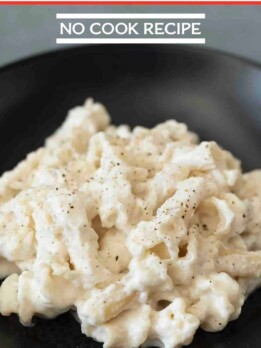
Traditional Italian pasta sauce usually falls into two categories: red or white. My Easy 3-Ingredient Ricotta and Pecorino Pasta Sauce is a no-cook creamy white sauce from the Liguria region. It proves that you don’t need a long simmer to achieve deep, authentic flavor.
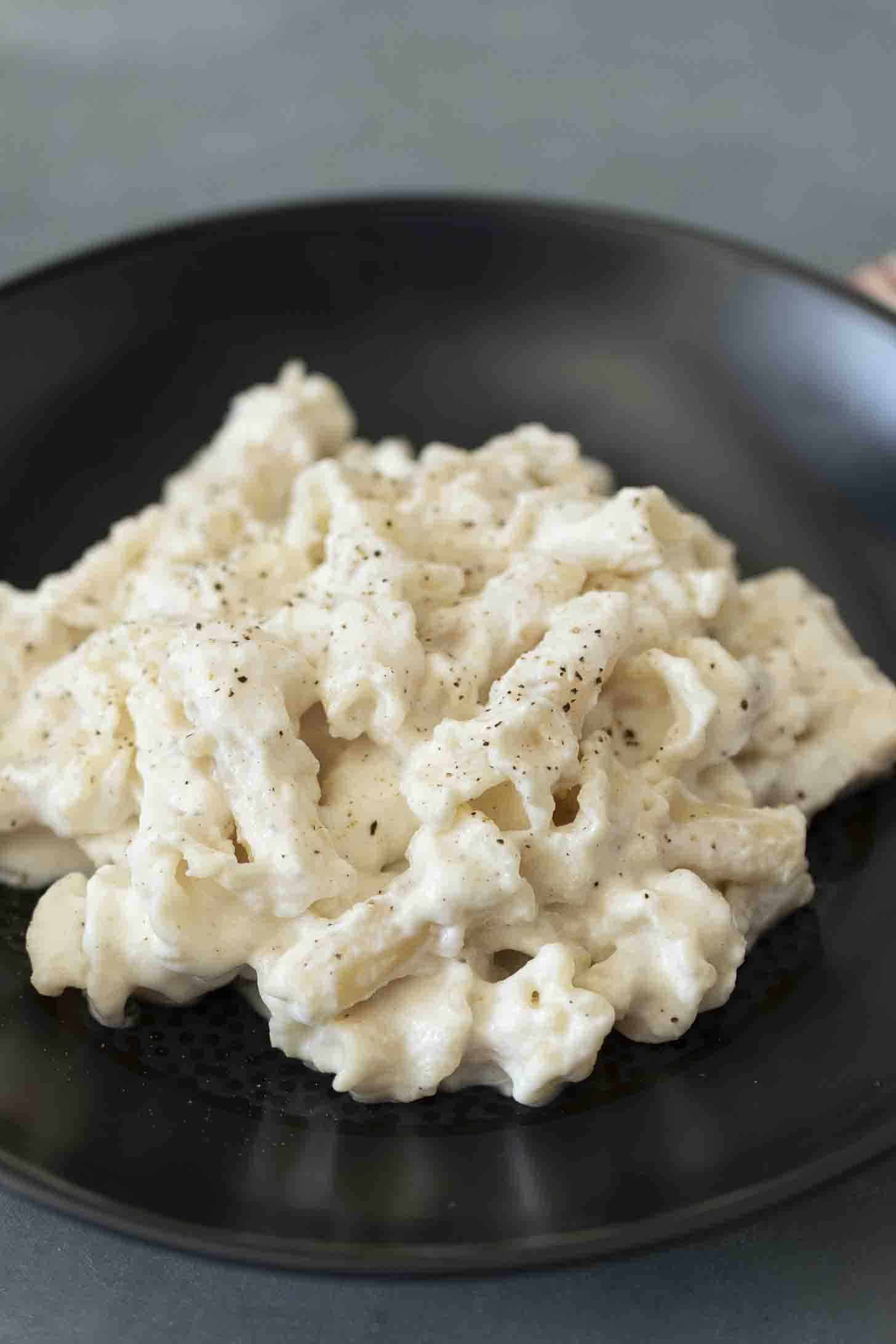
What is also nice about this is that it takes no cooking at all – just the pasta. If you can boil water, you can make this. It is a decadent, creamy sauce made with only three simple ingredients: ricotta, Pecorino Romano, and ground black pepper.
Table of Contents
The Story Behind White Pesto Sauce
We all know the ever-popular Marinara and Bolognese sauces, but in Italy, there is also a world of white sauces often referred to as Bianca. You could call this White Pesto. But, while we usually associate pesto with the famous green basil version – which takes its name from the Italian word for to pound – this pasta recipe offers a different take on that rustic tradition.
Instead of using a mortar and pestle to crush herbs, this version uses a hand-blended method to create a smooth, whipped consistency. It honors the spirit of pesto as a fresh, raw sauce, but exchanges the heavy labor for effortless creaminess.
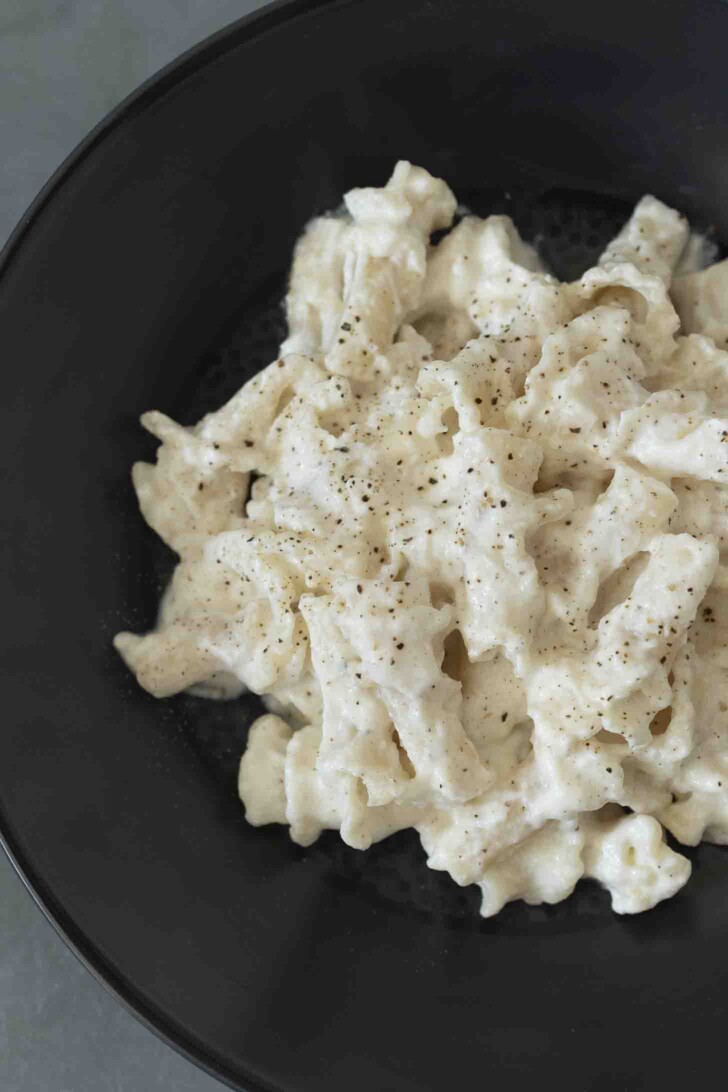
Pesto Bianco Ligure: A History of the White Sauce
The origin of this sauce is rooted in the Ligurian Alps, a mountain range located just east of the Italy and France border. This is where you’ll find the local cuisine known as La Cucina Bianca (the white kitchen or white cooking). Because these mountain communities had limited access to fresh Mediterranean vegetables, they built their recipes around white ingredients like flour, dairy, nuts, and garlic-free cheeses.
Cacio e Pepe Meets American Alfredo
The creamy ricotta sauce mixed with the sharp Pecorino is a tasty combination that results in a pasta cremosa (creamy pasta).
It is a white cheese sauce that you can add so much to, but it’s perfect in its simplest form. Unlike many heavy sauces, there is no garlic involved because it is a no-cook sauce. This allows the high-quality cheeses to be the star.
Different Ricotta Types
In Italy, there are two common types of ricotta: cow’s milk and sheep’s milk. Sheep’s milk ricotta is more tangy, much like Pecorino cheese, but it is not as common or easy to find in the US.
While the traditional pasta recipe calls for sheep’s milk ricotta, to solve the problem, I’ve added Pecorino Romano (a hard sheep’s milk cheese similar to Parmesan) to the mix. This mimics that distinct, tangy profile and provides the perfect salty bite to balance the milder cow’s milk ricotta, bringing the dish much closer to its traditional roots.
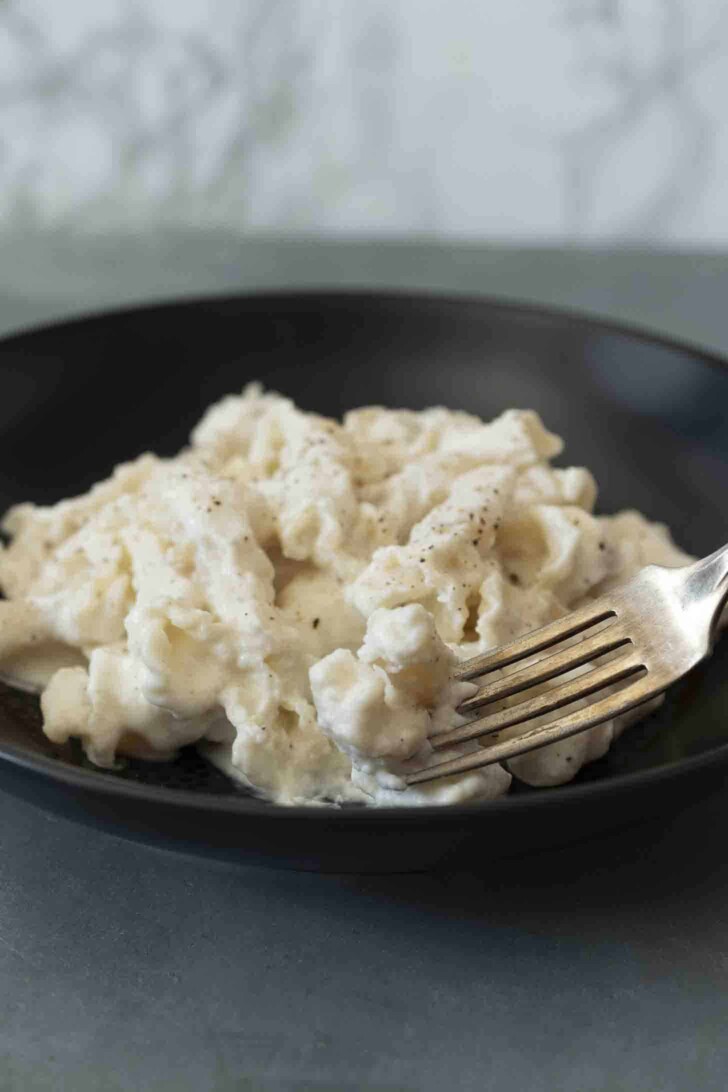
An Authentic Touch on Alfredo
It’s worth noting that authentic Alfredo sauce is different in Italy than anywhere else. In its original form, it is simply butter and Parmesan – the Roman predecessor to the heavy, cream-based American Alfredo sauce. This recipe honors that tradition of simplicity by using high-quality dairy to create a rich texture without the heavy fillers.
Optional Additions to This Sauce Recipe
- Lemon zest
- Fresh basil, chopped
- Cook pancetta or bacon pieces
- 1 or 2 garlic cloves
- Protein of your choice (cooked chicken or shrimp)
- A drizzle of good olive oil to finish the dish
Tips for Success
- Don’t Skip the Pasta Water: This is the most important rule! Before you drain your pasta, reserve at least one cup of pasta water from the pan. Since this is a no-cook sauce, the hot water is the magic ingredient helps the Pecorino cheese melt and turns the ricotta into a velvety sauce.
- Freshly Grated is Best: For this pasta recipe, avoid the pre-shredded cheese in the green can or plastic bags. Those contain anti-clumping agents that prevent the cheese from melting smoothly. Grate your Pecorino Romano fresh and finely for the best texture.
- Use Room Temperature Ricotta: Take your ricotta out of the fridge about 30 minutes before cooking. Adding ice-cold cheese to your pasta will drop the temperature of the dish instantly. By using room-temperature ricotta, the heat from the pasta and the reserved water will create a much smoother, warmer emulsion.
- Control the Consistency: Add the pasta water slowly – one splash at a time. You are looking for a creamy emulsion. If it’s too thick, add more water; if it’s too thin, a handful of extra Pecorino will thicken it right back up.
- Season with Care: Pecorino Romano is a naturally salty sheep’s milk cheese. Always taste your sauce before adding extra salt! You’ll likely find that between the salty cheese and the salted pasta water, you only need a tiny pinch.
- Use High-Quality Pepper: Since black pepper is one of the three main ingredients, use freshly cracked peppercorns if possible. It provides a floral heat that pre-ground pepper just can’t match.
Storing and Reheating Leftovers
If you have leftovers, you can store them in an airtight container in the refrigerator for up to 3 to 4 days. However, there are two things you need to know about keeping this sauce for later:
- The Sauce Will Thicken: Once chilled, the ricotta and Pecorino Romano will tighten up and the sauce will lose its creamy, whipped consistency. Don’t be alarmed if the pasta looks dry or clumped together the next day – this is completely normal for a cheese-based sauce.
- The Splash of Water Rule: To bring that silky texture back to life, do not just reheat it as-is. Add a splash of water (or a teaspoon of milk) to the bowl before reheating.
- Reheat Gently: Use low heat on the stovetop or 30-second bursts in the microwave, stirring in between. This prevents the cheese from breaking or becoming oily. As it warms up, the added moisture will help the ricotta loosen back into a creamy sauce.
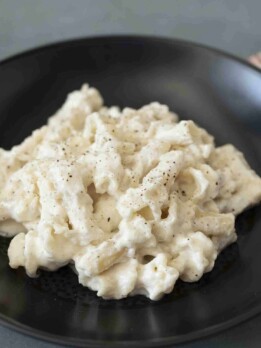
Easy 3-Ingredient Ricotta and Pecorino Pasta Sauce (No Cook Recipe)

Video
Ingredients
- 1 pound (453 grams) pasta of your choice
- 1 cup (7 ounces/200 grams) whole fat ricotta cheese, room temperature (see note)
- 1 ½ cups (135 grams) pecorino Romano cheese, finely grated
- ¼ teaspoon ground black pepper, you can adjust to your taste
- ¼ cup (60 ml) hot pasta water, plus more if needed
- Salt if needed, pecorino Romano is naturally salty
Instructions
Boil the pasta:
- Fill a large pan ¾ full of water. Bring to a boil and add the pasta. Cook according to package directions. Important: Before draining, reserve about 1 cup of the hot, starchy pasta water.
Make the sauce:
- Add the ricotta and Pecorino Romano to a blender or food processor. Pulse until well combined. Note: You can whisk this by hand in a large bowl, but a blender will give you a much silkier, professional-grade finish.
- Add the black pepper to the cheese mixture. With the blender or food processor running on low (or while whisking vigorously), slowly drizzle in the ¼ cup hot pasta water at a time. Check the consistency. If too thick for you, add more pasta water until the mixture loosens into a smooth, creamy sauce
- Taste and season with salt and more pepper if needed (remember, Pecorino is naturally salty).
- Transfer the sauce to a serving bowl. Toss the hot, drained pasta directly into the sauce. If the pasta looks dry, add a splash more of the reserved pasta water to emulsify. Serve immediately.
My new favorite pasta sauce. Topped with a little Calabrian chili sauce and oh my! Very tasty. Thank you
Ohhh, a spicy Italian kick. I like it and have to try it. Thank you.