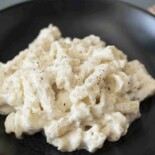
Easy 3-Ingredient Ricotta and Pecorino Pasta Sauce (No Cook Recipe)
This traditional, no-cook, creamy ricotta and pecorino sauce when mixed with pasta is the ultimate quick meal. By using the heat of the reserved water to create a creamy emulsion, you get a luxurious, whipped texture. All you have to do is cook the pasta.
Ingredients
- 1 pound (453 grams) pasta of your choice
- 1 cup (7 ounces/200 grams) whole fat ricotta cheese room temperature (see note)
- 1 ½ cups (135 grams) pecorino Romano cheese finely grated
- ¼ teaspoon ground black pepper you can adjust to your taste
- ¼ cup (60 ml) hot pasta water plus more if needed
- Salt if needed pecorino Romano is naturally salty
Instructions
Boil the pasta:
- Fill a large pan ¾ full of water. Bring to a boil and add the pasta. Cook according to package directions. Important: Before draining, reserve about 1 cup of the hot, starchy pasta water.
Make the sauce:
- Add the ricotta and Pecorino Romano to a blender or food processor. Pulse until well combined. Note: You can whisk this by hand in a large bowl, but a blender will give you a much silkier, professional-grade finish.
- Add the black pepper to the cheese mixture. With the blender or food processor running on low (or while whisking vigorously), slowly drizzle in the ¼ cup hot pasta water at a time. Check the consistency. If too thick for you, add more pasta water until the mixture loosens into a smooth, creamy sauce
- Taste and season with salt and more pepper if needed (remember, Pecorino is naturally salty).
- Transfer the sauce to a serving bowl. Toss the hot, drained pasta directly into the sauce. If the pasta looks dry, add a splash more of the reserved pasta water to emulsify. Serve immediately.
Video
Notes
This is cows milk ricotta which is more readily available with a subtle milky flavor. Sheep’s milk ricotta has a tangy flavor like Pecorino.
Make sure the ricotta is not cold or it may cool the hot pasta when mixed.
Use whole fat ricotta. Using lower fat ricotta may result in grainy or have small curd lumps and may not be completely smooth. Part-skim or fat-free options are frequently grainy, watery, and lack the creamy texture of whole milk options. Also, some mass-produced brands that lack sufficient fat or are made by heating milk/whey too quickly. Some brands use stabilizers like gums, which can cause the ricotta to weep liquid and turn grainy during cooking.
Nutrition
Serving: 1 | Calories: 612kcal | Carbohydrates: 39g | Protein: 37g