

Cornbread Sage and Onion Stuffing for Thanksgiving

There is nothing quite like homemade Cornbread, Sage, and Onion Stuffing on the Thanksgiving table. Often called traditional cornbread dressing down South, this easy bake is one of the best ways to elevate your holiday spread. Combining sweet, dried cubed cornbread with earthy fresh herbs and savory aromatics creates a rich, comforting side that completely steals the spotlight from the turkey.

Table of Contents
Why Fresh Sage Makes All the Difference
Dried sage can easily taste dusty or medicinal, but fresh sage brings a warm, earthy aroma that defines a great holiday spread. When it hits the melted butter and sautéed aromatics, the oils release instantly to coat every single piece of bread.
For the absolute best flavor, start with a batch of my homemade Sage Cornbread as your base. Because that cornbread already has fresh herbs baked right into the crumb, it creates a double-layered herbaceous flavor when combined with the chopped sage in the skillet. (Note: If you are using that specific sage cornbread for your base, just drop the fresh sage in the skillet down to 1 tablespoon so it doesn’t overpower the dish!)
How to Make Cornbread, Sage, and Onion Stuffing
Making a traditional holiday stuffing from scratch is wonderfully straightforward:
- Dry Out the Bread: Cut your cornbread and artisan bread into cubes. Spread them on baking sheets and let them dry out overnight, or toast them in the oven until dry and crisp.
- Sauté the Aromatics: Melt butter in a large skillet and sauté finely diced onions and celery until soft and translucent. Stir in minced garlic and finely chopped fresh sage until deeply fragrant.
- Combine & Toss: Transfer your dried bread cubes to a massive mixing bowl. Pour the onion, celery, and herb butter mixture over the top, tossing gently to coat.
- Moisten with Broth: Drizzle in warmed vegetable or chicken broth a little at a time, tossing gently until the bread is evenly moistened without becoming waterlogged. Fold in beaten eggs if you want a more cohesive, casserole-like structure.
- Bake: Transfer the mixture to your prepared baking dish and bake uncovered until the top is deeply golden brown and the edges are wonderfully crisp.
Choosing the Right Pan Size
The pan you choose directly impacts your stuffing’s texture.
- The Sweet Spot: A standard 9×13-inch baking/casserole pan is ideal. It spreads the stuffing out into a relatively shallow layer, maximizing the amount of crispy, golden-brown surface area across the top.
- Avoid Deep Casseroles: Avoid packing your stuffing into a deep, small dish (like an 8×8 or a heavy Dutch oven). A deep pan traps moisture, resulting in a dense, heavy center rather than that light, savory texture you want.
How to Avoid Soggy Stuffing
Nobody wants a mushy, waterlogged casserole. Follow these golden rules to keep your stuffing light, savory, and perfectly textured:
- Start with Dry Cubed CornBread: Freshly baked cornbread contains a lot of moisture. For the best texture, use cornbread that has been left out overnight or toasted in the oven until dry. This allows the bread cubes to act like little sponges, absorbing the rich sage-and-onion broth while keeping their structure intact.
- Add Broth Gradually: Do not dump all your broth in at once. Pour it in stages, tossing gently. The bread should be moist like a sponge, not dripping wet.
- Bake Uncovered: Always bake your stuffing uncovered so the excess moisture can evaporate, allowing those gorgeous top edges to get crisp and buttery.

Dietary Swaps: Gluten-Free & Vegetarian Options
It’s easy to adapt this recipe to fit your guests’ dietary needs without sacrificing an ounce of flavor:
- Vegetarian Option: Swap traditional chicken or turkey stock for a rich, high-quality vegetable broth or mushroom stock. Combined with butter and fresh herbs, it creates an intensely savory vegetarian centerpiece.
- Gluten-Free Option: Use your favorite gluten-free cornbread recipe (or store-bought GF cornbread mix) alongside a loaf of gluten-free sandwich bread. Just ensure your bread cubes are thoroughly toasted, as gluten-free tend to hold onto a bit more moisture.
Make-Ahead Instructions
Holiday cooking is stressful enough without trying to chop and cook everything on Thanksgiving morning. You can easily prep this stuffing ahead of time:
- Prep the Bread: Cube and dry out your cornbread and bread up to 2 days in advance, storing them in a paper bag or large container at room temperature.
- Assemble Partially: You can chop your aromatics, sauté the celery, onions, and fresh sage, and store the mixture in the fridge.
- Assemble Fully: Assemble the entire unbaked stuffing casserole in your 9×13-inch pan the day before. Cover it tightly with plastic wrap and refrigerate overnight.
- Bake: When ready to serve, pull it straight from the fridge, remove the plastic wrap, and bake. (Note: Because it’s chilled, you may need to add 10–15 minutes to your total baking time).
Storage, Freezing & Reheating
- Refrigerator Storage: Cover leftover stuffing tightly or transfer it to an airtight container. It will keep well in the fridge for 3 to 4 days.
- Freezer Storage: You can freeze baked or unbaked stuffing for up to 2–3 months. Thaw completely in the refrigerator overnight before reheating or baking.
- How to Reheat: To restore that crispy top, place leftover stuffing in an oven-safe pan, drizzle a spoonful of broth over any dry spots, cover with foil, and warm at 350°F for 15–20 minutes. Remove the foil for the last 5 minutes to crisp up the top crust!

How to Use Leftover Cornbread Stuffing
If you end up with extra cornbread, sage, and onion stuffing after the big meal, don’t let it go to waste! You can easily repurpose it into delicious new weekday meals:
- Holiday Sausage Rolls: Pair your leftover stuffing with leftover turkey and tart cranberry sauce to make my super-easy Leftover Turkey, Stuffing, and Cranberry Sausage Rolls. They make the ultimate post-holiday lunch or party snack!
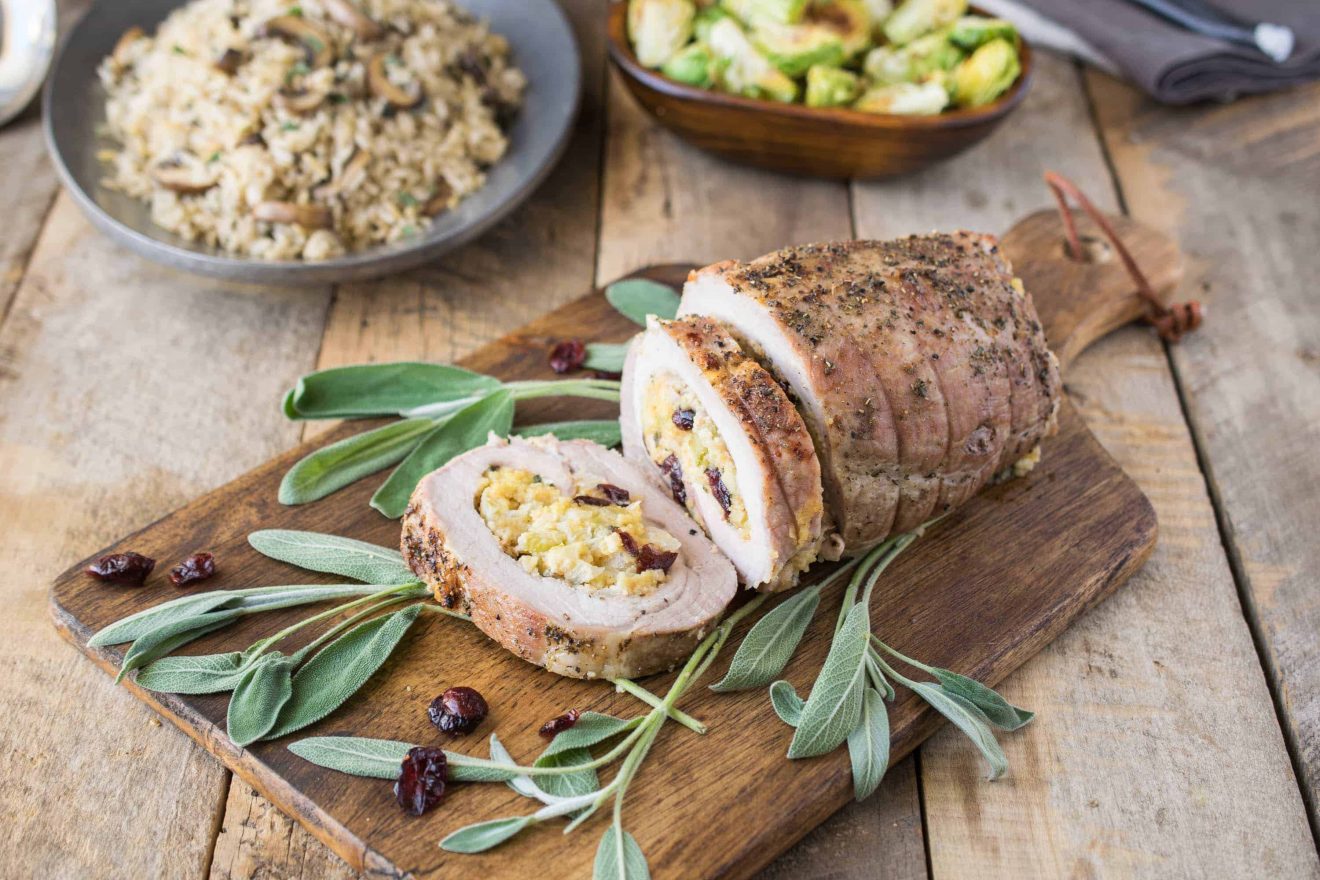
- Stuffed Pork Loin: Combine your extra stuffing with diced apples and sweet dried cranberries to create a savory, fruit-infused filling for my Cornbread, Apple & Cranberry Stuffed Pork Loin.


Cornbread, Sage and Onion Stuffing for Thanksgiving

Video
Ingredients
- 4 tablespoons (57 grams) butter, unsalted, plus more for greasing the pan
- 2 cups (226 grams) onion, chopped
- 4 celery stalks, chopped small
- 1 ¼ cups (295 ml) chicken or vegetable broth/stock
- 2 tablespoons fresh sage, chopped (use 1 tbsp if using my sage cornbread)
- 6 cups (700 grams) cooked (day-old or slightly toasted) cornbread, broken into large cubes or pieces
- Salt to taste
Instructions
- Preheat oven to 350°F (180°C). Butter your baking pan and set aside. 7×9-inch (1.5 quart) rectangle dish (also fits a 9×5-inch or 8×8-inch square dish)
- In a large skillet, melt the butter over medium heat. Add the onion and celery and cook, stirring often, for 5 minutes until softened. Add ½ cup of chicken stock and simmer for 3 minutes.
- Add the fresh sage and cornbread directly to the skillet, stirring well to mix. Add the rest of the stock and stir well to combine. Taste for seasoning and add a pinch of salt if needed.
- Transfer the stuffing into your prepared baking dish and bake uncovered for 30–35 minutes until it starts to brown on top.
Notes
- Sage Note: Only add 1 tablespoon of fresh sage if you are using my sage cornbread.
- Broth Note: Only add as much broth as you like depending on how moist you prefer your stuffing. Taste your broth to see how salty it is before adding salt to the stuffing.
- Use Day-Old Cornbread: Freshly baked cornbread can be too soft. Let it sit out overnight or toast it in the oven so it holds its shape and soaks up the broth without getting mushy.
- Prep Ahead: You can make the cornbread, sauté the onions and sage, and assemble the stuffing a day in advance. Just cover, refrigerate, and bake when ready.
- Keep Warm: If the oven is full, transfer the baked stuffing to a slow cooker on warm or keep it in a low oven (around 200°F/93°C) covered with foil.
- Refresh Leftovers: Add a splash of broth before reheating in the oven to bring back moisture.
- Customize: Add cooked sausage, diced apples, or chopped pecans for fun variations.
I want to make this, but my daughter can’t have butter. She can only have goat ghee or sesame oil. Would either of those work instead of butter.
The goat ghee is the better choice. Sesame oil has a very strong, distinct flavor that would overpower the flavor of the stuffing.
Can I stuff a turkey breast with this stuffing?
You can use it to stuff a turkey breast, or a whole turkey if you wish. Enjoy.
I put eggs in mine , so I cook the day before and then reheat . I have a pot of turkey broth on the stove which I use to moisten.
Sounds perfect, thank you for sharing.
I tried chicken with this corn bread dressing. Love love
Thank you
Can you make the stuffing a day in advance and reheat on Thanksgiving? Does it still come out well?
Yes, you can make it ahead. I talk about this in the body of my text. It is one less thing you have to prepare the day of. Just make the recipe, transfer to a casserole dish, cover and refrigerate. When you need it, bake per the recipe, 350°F/180°C. for 20-25 minutes.
I brought this to my parents house and they were so impressed that I pulled it off (did use jiffy mix). I made it up to baking then baked it off at moms house. Not too sweet and just the right amount of sage.
There’s nothing wrong with taking a little help from a packet. I’m glad it was enjoyed
I put eggs in my sage dressing. First I put All ingredients on the stove top in pot as it cooks excess water out. Then I pore ingredients in bowl I add egg mix well. I put it on a greased well with real unsalted butter lightly. Then you pour sage mixture on buttered pan on oven until you can cut in squares to eat yummy
This looks delicious! Thank you for sharing at the Pretty Pintastic Party last week, I’m featuring your stuffing this Friday, hope you’ll be back to link up again.
I have a huge weakness for cornbread. it’s honestly embarrassing – like I’m even embarrassed about how much of it I eat at home in front of my fiance. But if I managed to save enough (or make enough) cornbread for this recipe…. This looks heavenly! It’s so many of my favorite flavors in one!
I’m personally a fan of stuffing in any form. It got way better once I realized that it could be (easily) made by hand and not from a box. I love the idea of using cornbread! Thanks for linking up at #FoodieFridays!
Oh yum, I love cornbread stuffing and sage is one of my favorite spices! Pinning to try for later! Stopping by from Let’s Get Real 🙂
This cornbread recipe is great! I like the combination with celery.
This looks so perfect. I have never seen sage being used in Cornbread. Those leaves look perfect.
I love corn bread stuffing, my cousin had used it for the turkey last year on Thanksgiving! Must try your recipe next time! That turkey on the table looks so yummy… Can’t wait for the recipe and more pictures! 🙂
I love this stuffing! So pretty and so filled with wonderful flavors! Yum! And, I also love the idea of a whole week of Thanksgiving recipes from your blog! Pinned this one for later!
This stuffing sounds amazing, Janette! We don’t have thanksgiving here in NZ but we do the whole turkey dinner thing at Christmas so I will definitely be trying this stuffing this year. Thanks!