

Sage Cornbread

Nothing beats the smell of cornbread baking in the oven—but Sage Cornbread takes it up a notch. Fresh sage adds an earthy flavor and makes for a beautiful presentation, especially when baked in a cast-iron pan for even heat and perfect browning. Serve it warm with butter for a heavenly bite, or use it as the base for a flavorful holiday stuffing or dressing.
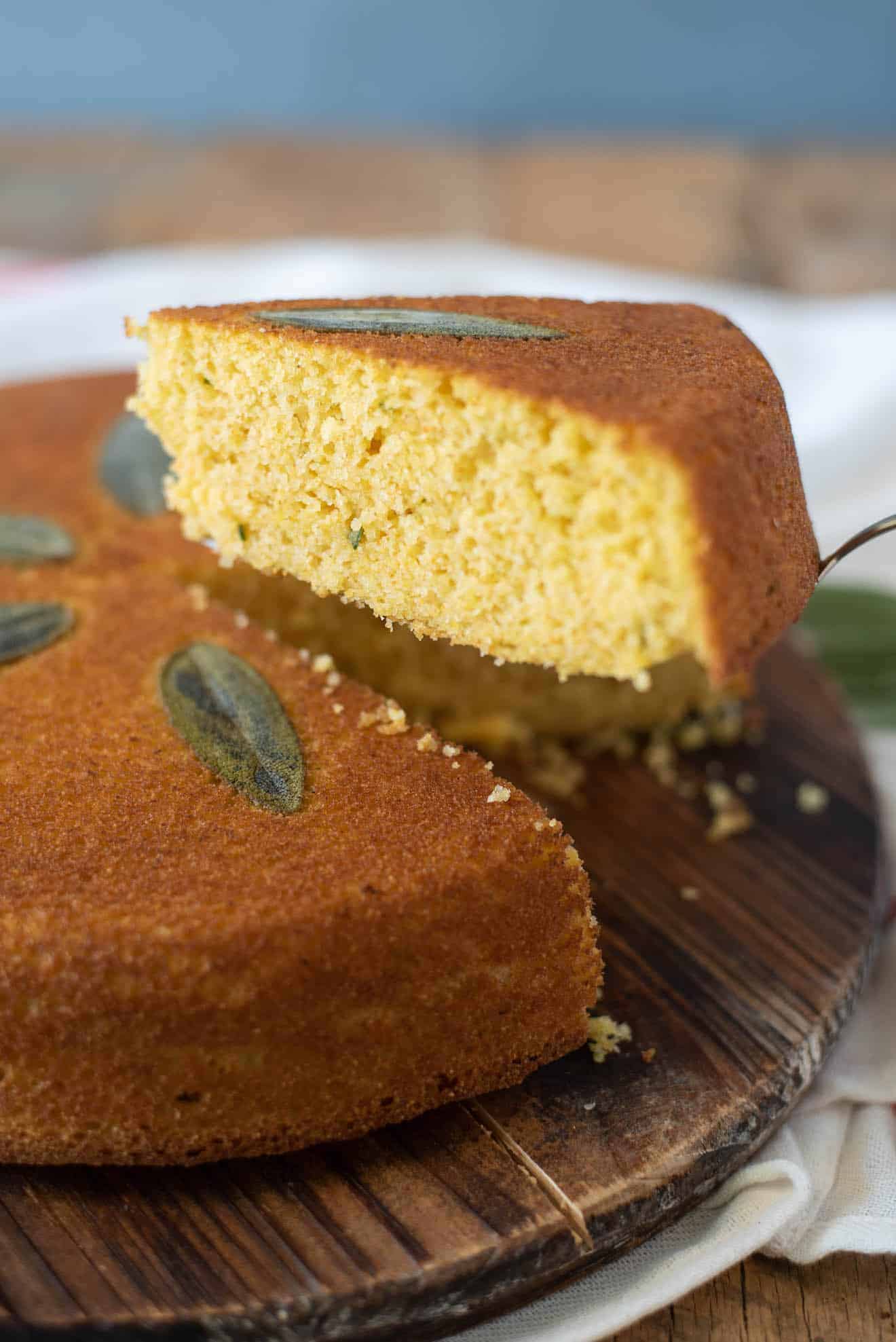
Table of contents
- Ingredients:
- Northern or Southern Cornbread?
- Why use buttermilk in cornbread?
- The best cornmeal for cornbread
- Baking powder and baking soda in cornbread
- Sage cornbread presentation
- Cornbread variations
- Cornbread comforts for the cold months
- Sage cornbread for your holiday table
- Leftover cornbread
- Best pan for cornbread
- Tips for the best cornbread
- Serving cornbread
Ingredients:
- Cornmeal
- All-purpose flour
- Baking soda
- Baking powder
- Salt
- Sugar
- Buttermilk
- Eggs
- Butter
- Fresh sage leaves
For years, I was a dedicated Jiffy Cornbread Mix fan as it’s so convenient. But, since I started making my own from scratch, I’ve never looked back and bake this on weekly rotation. One of my most popular that’s been here since 2018.
Northern or Southern Cornbread?
I’m team Southern cornbread all the way! The main difference comes down to sweetness—Northern cornbread leans sweeter, while Southern keeps it more savory. The best part? You get to choose. I’ve included both sugar measurements in the recipe so you can make it just the way you like it.
Why use buttermilk in cornbread?
Buttermilk is the secret to tender, flavorful cornbread. Its slight tang balances the richness of the cornmeal mixture, while the acidity helps soften the crumb and keep it moist. Paired with a touch of butter, it gives cornbread that irresistible balance of savory and subtle sweetness.
The best cornmeal for cornbread
The type and texture of cornmeal make a big difference in your cornbread. For the most flavor, use stone-ground cornmeal—it has a nutty, toasty taste and adds a rustic texture. If you prefer a softer, cake-like cornbread, medium grind or finely ground cornmeal works beautifully. Many bakers like to mix coarse and fine cornmeal to get a bread that’s both flavorful and tender.
As for color, yellow cornmeal is traditional in the South, while white cornmeal is common in Northern recipes. Either works, but choosing a fresh, high-quality cornmeal ensures the best flavor and texture in your cornbread.
Baking powder and baking soda in cornbread
Cornbread relies on baking powder as well as baking soda to rise and become light and tender. Baking powder works on its own to provide lift, while baking soda is usually added when the recipe includes acidic ingredients like buttermilk. The combination ensures a cornbread that’s fluffy inside with a slightly crisp, golden crust. Using the right amount of each keeps your cornbread from becoming dense or heavy.
Sage cornbread presentation
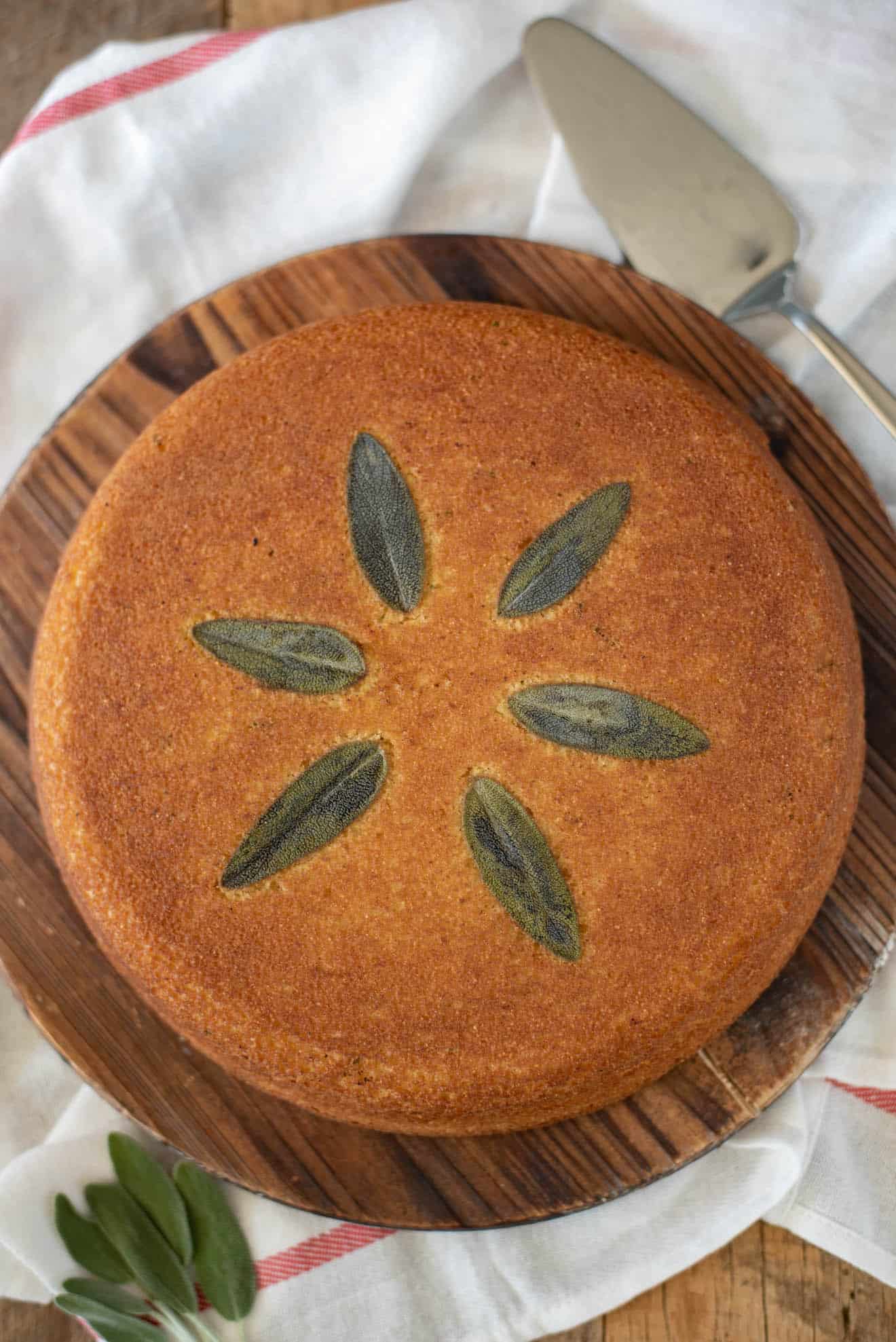
Want to dress up your cornbread? Line the bottom of skillet with whole sage leaves before pouring in the cornbread batter. When it’s baked and served upside down, you’ll reveal the golden brown bottom topped with a beautiful sage-leaf design. It’s an easy step that adds a big wow factor for your guests. Of course, it’s optional, but it makes this rustic dish look extra special.
Cornbread variations
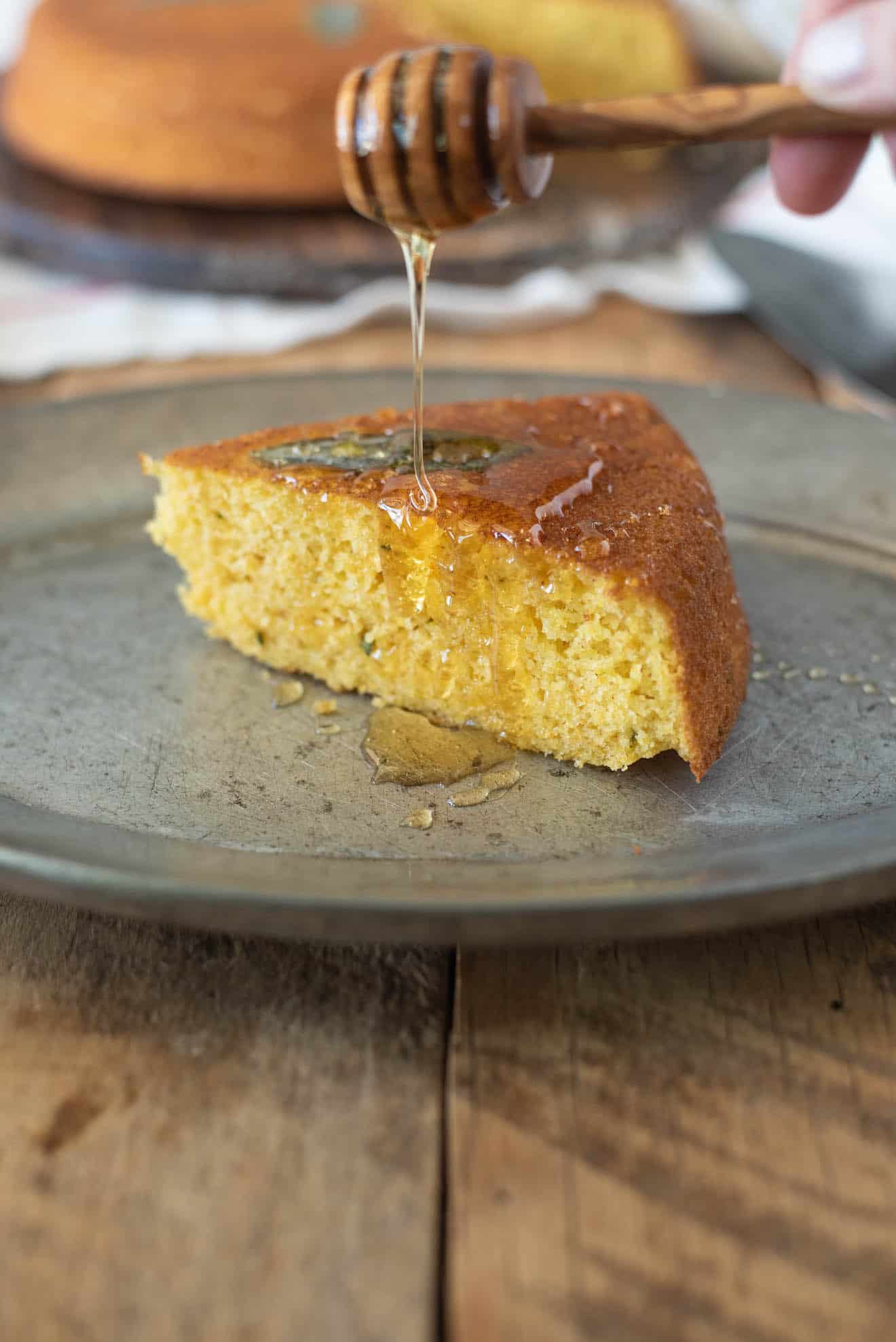
This skillet sage cornbread does not have to be just for stuffing or dressing. You could add just about anything to the batter: cheese, jalapeño, chopped bacon, replace the butter with bacon fat, honey, vegetables. Or, simply serve it old school with a drizzle of honey (see the pic below).
Cornbread comforts for the cold months
When the weather turns chilly, cornbread becomes more than just a side dish—it’s comfort in every bite. Pair it with hearty soups, stews, and chilis to soak up every drop, or crumble it into stuffing and casseroles for holiday gatherings. It even makes a cozy base for breakfast, topped with butter and honey or jam. Warm, rustic, and versatile, cornbread is a staple that brings comfort to the cold months.


Sage cornbread for your holiday table
This cornbread would be a welcome addition to your holiday table. Serve as a side for your Roast Turkey or Baked Ham. I also like to use it to make my Cornbread Sage and Onion Stuffing. I love the combination of the sweet cornbread, the onion flavor, the fresh celery and the earthiness of the sage. It’s everyone’s favorite dish on my Thanksgiving table and it takes all my strength to not eat it all before it gets to the table!
Leftover cornbread
Don’t let leftover cornbread go to waste—there are so many delicious ways to reinvent it! I love turning it into Cornbread Sage and Onion Soup (it tastes just like stuffing in a bowl). You can also crumble it into a classic stuffing or dressing, or even use it as a flavorful base for Stuffed Pork Loin with apples and cranberries. Leftovers never tasted so good!
Best pan for cornbread
I love making cornbread in a cast iron or ovenproof skillet. It never sticks and always bakes evenly. Just make sure you preheat the skillet in the oven first!
Tips for the best cornbread
- Use fresh, high-quality cornmeal – Stone-ground for flavor and texture; a mix of coarse and fine works beautifully.
- Don’t overmix – Stir until just combined; overmixing can make cornbread dense.
- Add a little fat – Butter, oil, or buttermilk keeps the cornbread moist and tender.
- Use unsalted butter – It gives you control over the salt and keeps the cornbread rich and tender.
- Let the milk and egg mixture come to room temperature – This helps the batter mix evenly and rise properly.
- Preheat your pan – For cast-iron or metal pans, preheating gives a golden, crisp crust.
Serving cornbread
Cornbread is best served warm, straight from the oven, when it’s soft, tender, and lightly crumbly. A pat of butter melting into each piece makes it irresistible. That said, cornbread also holds up well at room temperature, especially if you plan to serve it alongside soups, stews, or holiday dishes. Warm or room temp, the key is fresh cornbread with a golden crust and rich corn flavor—perfect on its own or as a side.
If you’ve made my Sage Cornbread, please leave a star rating in the recipe card. You can also leave a comment or ask a question below.

Sage Cornbread

Video
Ingredients
- 1 cup (140 grams) plain cornmeal , fine ground
- ¾ cup (90 grams) all-purpose flour
- 1 teaspoon baking soda
- 1 ½ teaspoons baking powder
- 1 teaspoon salt
- 1 tablespoon granulated sugar
- 1 ¼ cups (295 ml) buttermilk
- 2 large eggs, beaten, room temperature
- 4 tablespoons unsalted butter, plus 1 tablespoon melted and cooled
- 6 large whole fresh sage leaves
- 1 teaspoon fresh sage, chopped
Instructions
- Place a 10-inch cast iron skillet into the oven and preheat oven to 400°F/200°C.
- To a mixing bowl, add the cornmeal, flour, baking soda, baking powder, salt, sugar, mix.
- Stir in the buttermilk, eggs and the 4 tablespoons melted butter. Mix until well combined. Stir in the chopped sage.
- Remove the skillet from the oven and brush the pan with the 1 tablespoon butter to coat the pan evenly. Arrange the sage leaves (with the underside of the leaf facing you) on the bottom of the skillet. They should stick to the butter to stay in place.
- Pour the batter into the skillet and spread evenly. Bake for about 18-20 minutes or until golden brown, depending on your oven. A toothpick should come out clean when inserted into the center.
- Allow to cool in the pan for about 15 minutes. Turn the cornbread out so the sage leaves are on the top. Slice and serve.
Do I use plain cornmeal or self rising cornmeal?
Yes just plain cornmeal. Enjoy.
I bought a cast iron skillet especially to make this cornbread and i’m so glad i did. This was my first time making cornbread and it’s so easy. I was worried because I used regualar milk but it turned out perfectly. I’m bringing this to my sisters house thanksgiving.
The cast iron skillet is the only way I made my cornbread. It always sticks to my glass Pyrex dishes. I hope your family enjoys it.
I found your stuffing recipe and want to make it this year! I need to do the recipe x4 or 5, and wondering how many of the cornbread recipe I need to make? Thanks in advance!
Merina
Hi Merina. If I understand your question, the cornbread recipe makes 6 servings and you need 4 or 5 times more than this? So this means you are serving 24 to 30 people? You’d need to make 4 or 5 of these. I hope I answered correctly and this helps.
Thank you! On your stuffing recipe it said it serves 4, and I will have between 15-20 people, so I figured I’d do the recipe x4, and I just wasn’t sure if this cornbread recipe equaled the six cups I need for the stuffing.
Since I have to make a few of these and only have one cast iron, could I do the recipe x the amount I need and bake in a regular pan, and if so, do I keep the same temp, and how long should I bake it? Or do you recommend just making each one at a time in the cast iron?
Merina, I think since you have to make so much you should start days in advance. Make your cornbreads and leave them on the counter to dry out that way you can make them in the cast iron skillet one at a time.
OMG I don’t even like cornbread…but this looks absolutely incredible!!!
Really lovely cornbread – and excellent treatment of those sage leaves! I have a nice, light wheat beer I’m thinking would pair perfectly with this …
Brilliant! And I have a yard full of sage plants (and other native California plants).
You’re very lucky Audrey, thank you for visiting.
Hi! Just saw your sage cornbread photo on Pinterest. It looks so beautiful and delicious. Great job!
I’m always looking for a yummy cornbread recipe. The Hubby loves it! Thanks Janette! Pinned
Thank you KC.
Having a fabulous cornbread recipe is key to Thanksgiving, and I love your use of the sage here. So pretty!
I am a sage freak! I don’t think it gets used often enough throughout the year. Have never tried it with corn bread–sounds delicious. Beautiful presentation too.
What a wonderful idea to put the sage on the bottom of the pan so you see it when you turn it out. I’ve never made any cornbread … can you believe that? I’d love to, though. I guess being from the UK is a decent enough excuse! Will look forward to following along with your thanksgiving preparation!
Thank you Helen. I hadn’t made cornbread either until I moved to the U.S. 🙂
What a nice trick, to make this delicious corn bread look even more beautiful! I love it! Pinning!!!
Thank you Mira, makes for a nice presentation.
I would be this turns out delicious Janette. I love the flavor of sage.
Thank you Patty, it is pretty tasty.