

Ricotta and Spinach Frittata
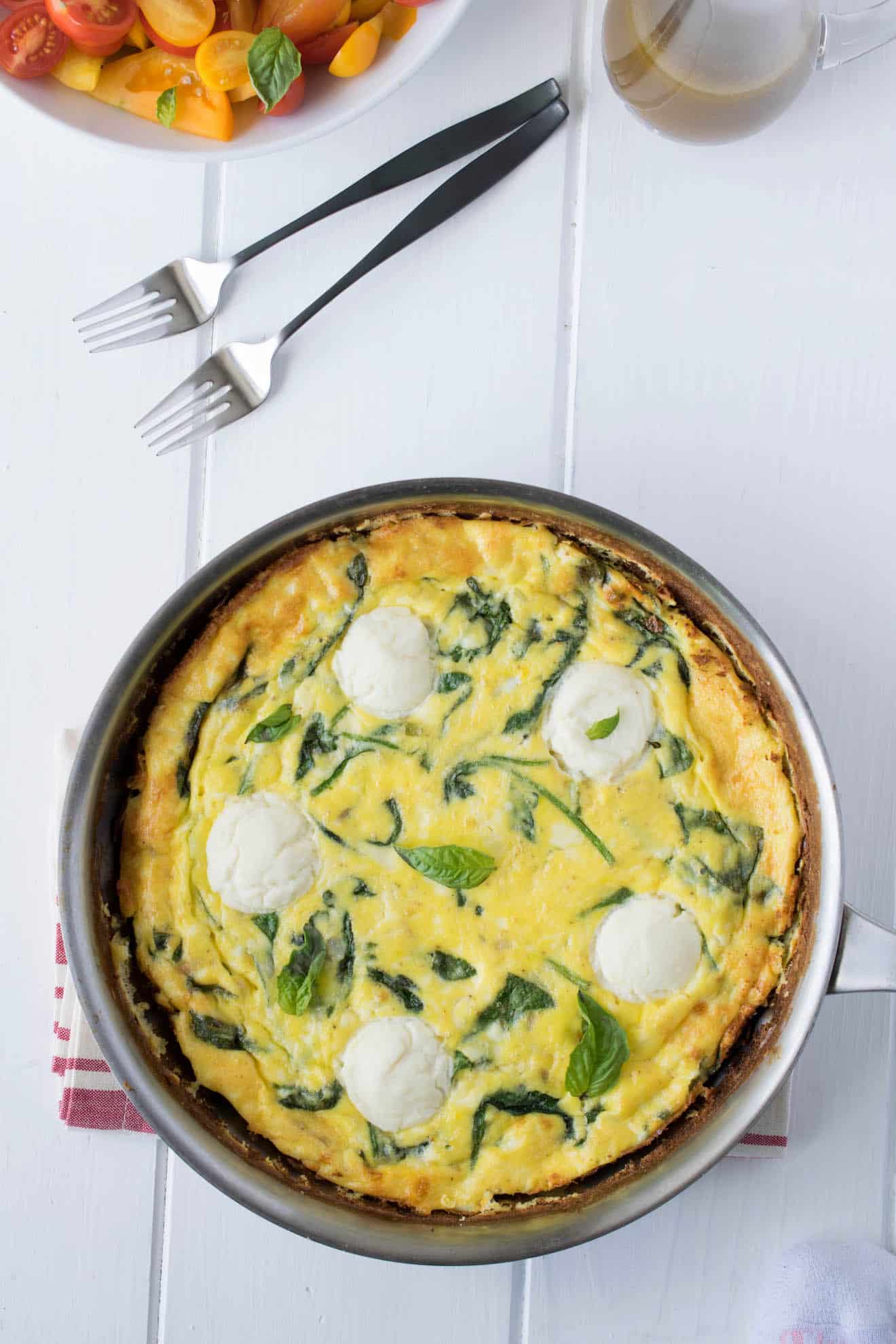
My Ricotta and Spinach Frittata makes a quick and elegant breakfast or brunch. Serve it warm, at room temperature, or straight from the fridge—it’s delicious any way you slice it. Fresh basil, sweet shallot, spinach, creamy ricotta, and nutty Parmesan come together to create a colorful, light and tasty meal.
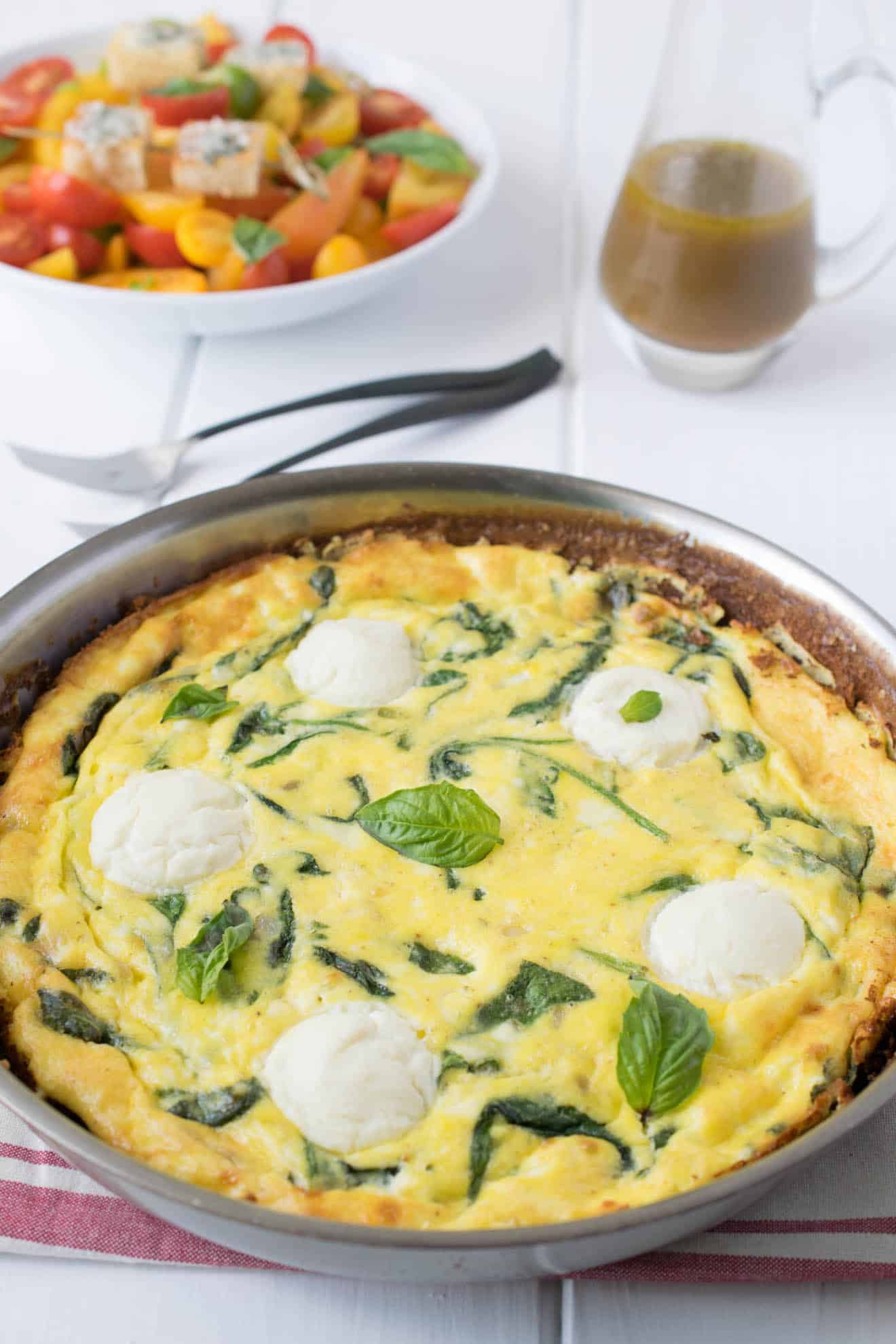
This frittata has been a go-to recipe here since 2016 – perfect for Lacto-Ovo vegetarians (or lacto-vegetarians). I’ve recently given it a few updates along with a video.
Table of Contents
What is a Frittata?
Italian-style omelets (or omelettes depending on what part of the world you’re in) are typically served for breakfast or brunch and act as a blank canvas you can easily customize—perfect for using up leftovers. Just check out my Sweet Potato and Sage Frittata which is perfect for the cooler months.
Unlike the delicate, traditional French omelet, which is cooked entirely on the stovetop, frittatas are thicker and more substantial. You start them on the stovetop and finish them in the oven. A closer comparison would be the Spanish omelet (Spanish tortilla), which is also thick but cooked entirely on the stove and flipped in the pan.
Egg Preparation Tips
- Serving size: Allow 2 eggs per person as a general rule.
Egg temperature: Use room temperature eggs because they whisk much easier than cold eggs and cook more evenly.
How to get a softer, lighter texture: While not traditional, adding 1 teaspoon of whole milk per egg lightens the texture. Note that for this specific recipe, the milk is replaced by ricotta.
The perfect salt ratio: Use roughly ⅛ teaspoon of salt per egg so you don’t have to guess the seasoning.
How to Handle Frittata Fillings
- Pre-cook watery vegetables: Always cook high-moisture vegetables like zucchini, peppers, or mushrooms beforehand. Otherwise, they will release water and make your frittata soggy.
Avoid fresh tomatoes: Skip ingredients like fresh tomatoes entirely because they are too difficult to cook down to remove excess moisture.
Fully cook raw meats and aromatics: Onions, potatoes, bacon, or sausage must be fully cooked before adding them to the eggs. The frittata does not bake long enough for raw ingredients to cook through.
Mix before pouring: Combine all of your prepared fillings and eggs in a large bowl first to ensure an even distribution throughout the pan.
Why Add Nutmeg
The secret ingredient: Nutmeg adds a warm, subtly sweet, and earthy note to a Ricotta and Spinach Frittata. It enhances the overall richness and pairs beautifully with the dairy in the cheeses without overpowering the dish.
Choosing the Right Pan
Ricotta in a Frittata
Whole milk ricotta adds a lovely creamy texture and contains less moisture than lower-fat versions. Less moisture helps prevent the dish from becoming soggy.
The best pan style: Use an ovenproof, nonstick skillet with sloped sides so the frittata easily slides out. Avoid stainless steel and cast iron pans.
Pan sizing guide: Match your pan size to your egg count. Use an 8-inch (20 cm) pan for 8 eggs, or a 10-inch (25 cm) pan for 10 eggs.
Controlling thickness: A smaller pan makes a thicker frittata. For example, cooking 8 eggs in a 10-inch pan will result in a much thinner frittata than cooking 10 eggs in that same pan.
Cooking Techniques
Keep the stove heat low: Cooking over high heat causes the eggs to set too quickly and cook unevenly.
Stir like scrambled eggs: When you first pour the eggs into the pan, stir them continuously with a rubber spatula. This technique lightens the texture, stops the release of excess liquid, and helps the eggs set evenly.
Bake on the top rack: Always place the pan on the upper ⅓ of your oven. Because the bottom of the frittata is already in direct contact with the hot pan, the top needs that closer, direct oven heat to finish cooking.
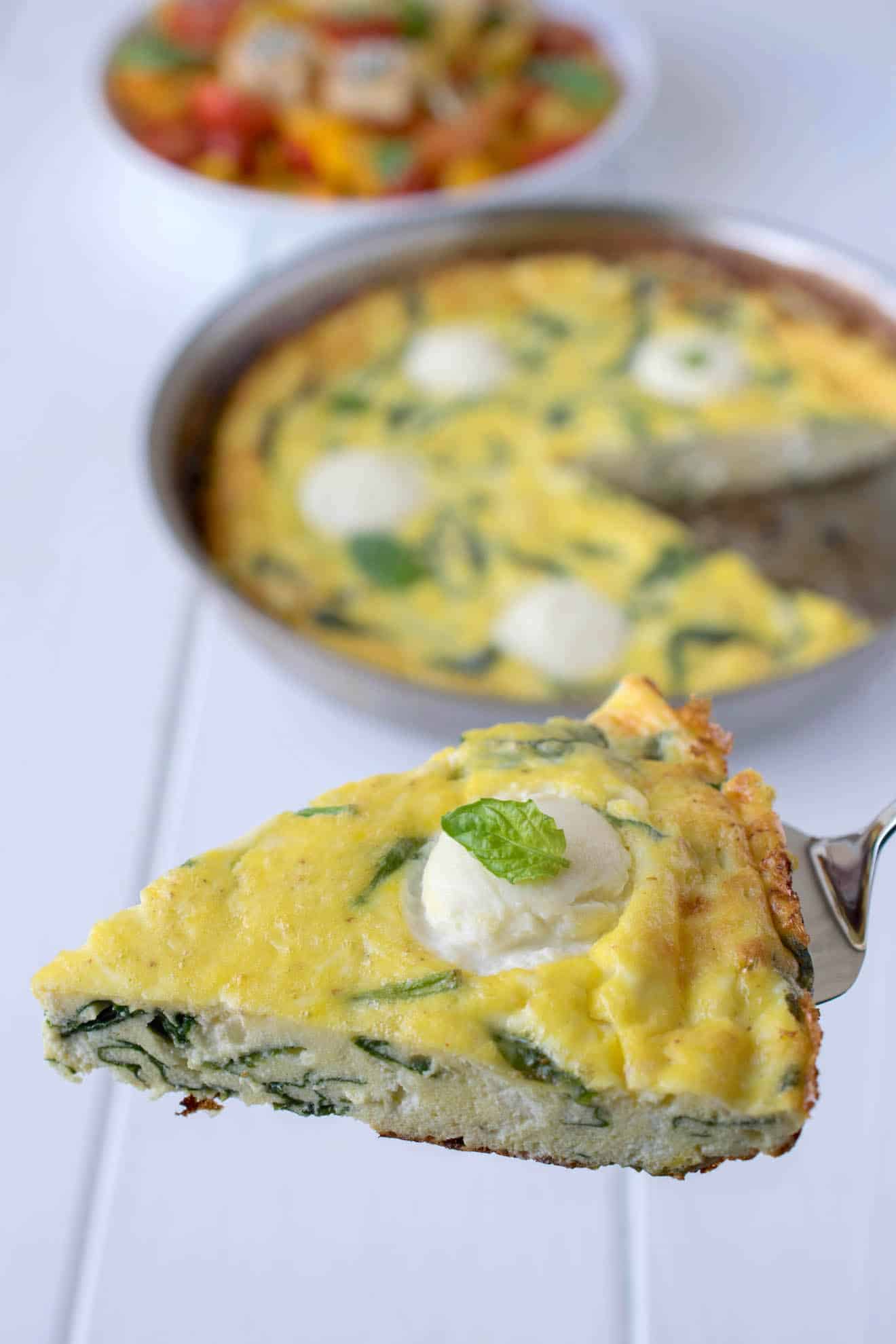
How to check for doneness: Gently shake the pan. The frittata is perfectly done when it no longer jiggles and the top looks completely matte rather than shiny
Frittata additions
When it comes to frittata add-ins, mix it up! Add tomatoes, bell peppers, ham, bacon—anything you like. Make it your own, the possibilities are almost endless.
If you’ve made my Ricotta and Spinach Frittata, please leave a star rating in the recipe card. You can also leave a comment or ask a question below.
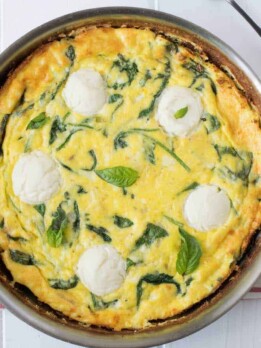
Ricotta and Spinach Frittata

Video
Ingredients
- 2 teaspoons unsalted butter
- 3 teaspoons olive oil
- ½ cup (50 grams) 1 large shallot, finely chopped
- 2 handfuls of baby spinach
- 10 large eggs, room temperature
- 1 cup (250 grams) (+ ½ cup 125 grams) ricotta , strained (see note)
- 2 tablespoons freshly grated Parmesan cheese
- 2 tablespoons fresh basil, chopped
- 1 ¼ teaspoon salt
- ¼ teaspoon freshly ground black pepper
- Small pinch fresh nutmeg , see note
- 1 tablespoon fresh basil, chopped (for garnish)
Instructions
- Preheat oven to 350°F (175°C). Position the oven rack in the upper ⅓ of the oven. This will prevent the bottom of the frittata from overcooking while the top sets.
- To a 10-inch (25 cm) non-stick, ovenproof frying pan, add 1 teaspoon butter and 2 teaspoons olive oil over medium-low heat. Once the butter is melted and bubbly add the shallots. Cook, stirring until softened, about 5 minutes. Do not brown, adjust the heat as needed. Add the spinach and cook just until it is wilted. Remove the pan and set aside to allow to cool.
- Add the eggs to a large bowl and whisk well. Add the 1 cup ricotta, Parmesan, basil salt, pepper and nutmeg. Whisk to help distribute the ricotta.
- Once the shallots and spinach are slightly cooled, mix them into the egg mixture.
- Return the pan to the heat on low. Add the remaining 1 teaspoon butter and 1 teaspoon oil. Pour the egg mix into the pan and use a heatproof, rubber spatula to gently agitate the eggs, as if you're scrambling them. This technique lightens the texture and helps the eggs cook more evenly. As you stir, the eggs will begin to set and release less liquid. You can see this demonstrated in the video below the recipe.
- As the frittata starts to set, stir the spinach so it is evenly distributed, then use the spatula to smooth the top.
- Transfer to the preheated oven and bake for 5 to 15 minutes (time will vary per oven). After 5 minutes, rotating the pan halfway so the top gets evenly cooked. And continue to cook until the top is set.
- To test for doneness, the center should not look wet, the eggs should look set and should not jiggle too much when you shake the pan and the edges should have pulled away from the edge. The top should not be browned.
- Allow the frittata to cool slightly in the pan. This will allow the steam to subside and excess moisture from seeping out. Then top with the remaining ricotta (I use a small ice cream scoop).
- To remove from the pan, use a rubber spatula to run around the edge to loosen and lifting slightly so it is not stuck. Slide onto a plate or cutting board.
Great way to use up leftover ricotta and spinach cannelloni filling. Thank you!
You’re welcome
Fantastic recipe. I didn’t have basil so I left it out and it was still delicious. My whole family loved it, thank you.
Thank you, so glad you liked it.
If I bake ahead an freeze for a later date – how will it freeze ??????
I have never frozen a frittata, but I don’t see why it can’t be done. I would freeze it before slicing to keep the texture intact. Simply defrost in the fridge overnight and reheat in the oven at 350/175 for about 20-25 minutes. I hope this helps and enjoy.
This is a wonderful recipe that I made this weekend for brunch. Will make it again.
Thank you so much
this is delicious and incredibly easy to make… highly recommend this
I’m so happy you liked the frittata, thank you for the feedback.
very easy to make but I need to use a non stick pan next time
Oh no, eggs can be very hard on stainless pans.
Yum
Thank you. Did you try the recipe?
Waned to use up ricotta and some veg. Easy to whip up. Thanks!
You’re welcome. Frittatas are perfect for using up ingredients.
Hi there!
This recipe looks amazing, but I noticed that the ingredient list does not indicate how much milk is required. If you could update that, I can’t wait to try it!
Hi K, there is no milk in the recipe. I hope you try it and like it, thank you for stopping by.
Oh wow! This looks amazingly flavorful! Can’t wait to try it!