

Lemon Risotto with Peas
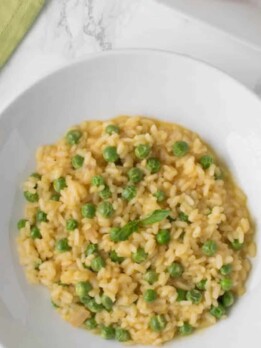
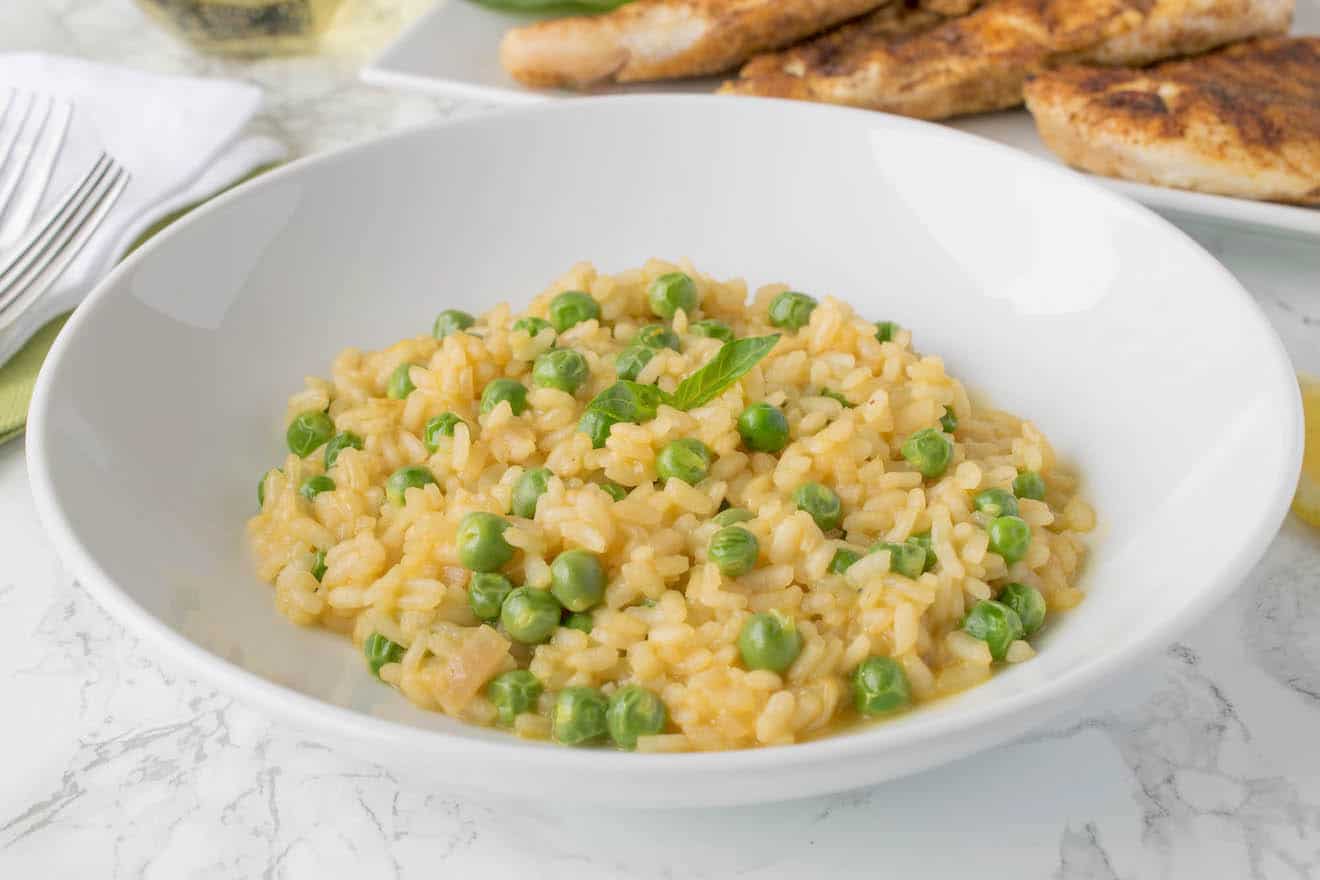
Late spring and early summer are the perfect times for bright, fresh flavors and making Lemon Risotto with Sweet Peas. This vibrant, comforting dish is made the traditional way and pairs beautifully with chicken, seafood, or roasted seasonal vegetables. It is also incredibly versatile, making it the perfect canvas for whatever fresh produce you grab from the market this week.

Table of Contents
The History of Risotto
Risotto originated in northern Italy, particularly in the Piedmont and Lombardy regions, where short-grain rice is widely grown. It is traditionally made using Arborio rice, a short-grain Italian rice named after the town of Arborio in Piedmont. This type of rice is ideal because it releases starch as it cooks, giving the dish its signature creamy texture while the grains remain tender with a slight bite.
Risotto without Cream
Traditionally, there’s no cream – and it doesn’t need it. The creamy texture comes from the rice releasing its starch into the cooking liquid, creating a smooth, velvety sauce without being too soupy. A final addition of freshly grated Parmesan cheese enhances the creaminess even more while adding wonderful flavor.
Risotto Does Not Take as Much Time as You Think
You don’t have to stand over the pan stirring for an hour. The cooking process takes only about 20 minutes of actual rice cooking time. A warm cup of stock or ladle-full is added one at a time, but you don’t need to stir constantly. Just give it a stir with a wooden spoon after each addition of stock – this helps release the starch and develop the signature creamy texture.
How to Tell When Risotto is Done
Check by taste: After 20 minutes, try a grain of rice. It should be tender but slightly firm (al dente). The dish should be creamy but not mushy, and the grains should hold their shape. If it feels too firm, add a splash of warm stock and cook a minute longer. Try again after a couple of minutes.
Spring and Summer Peas
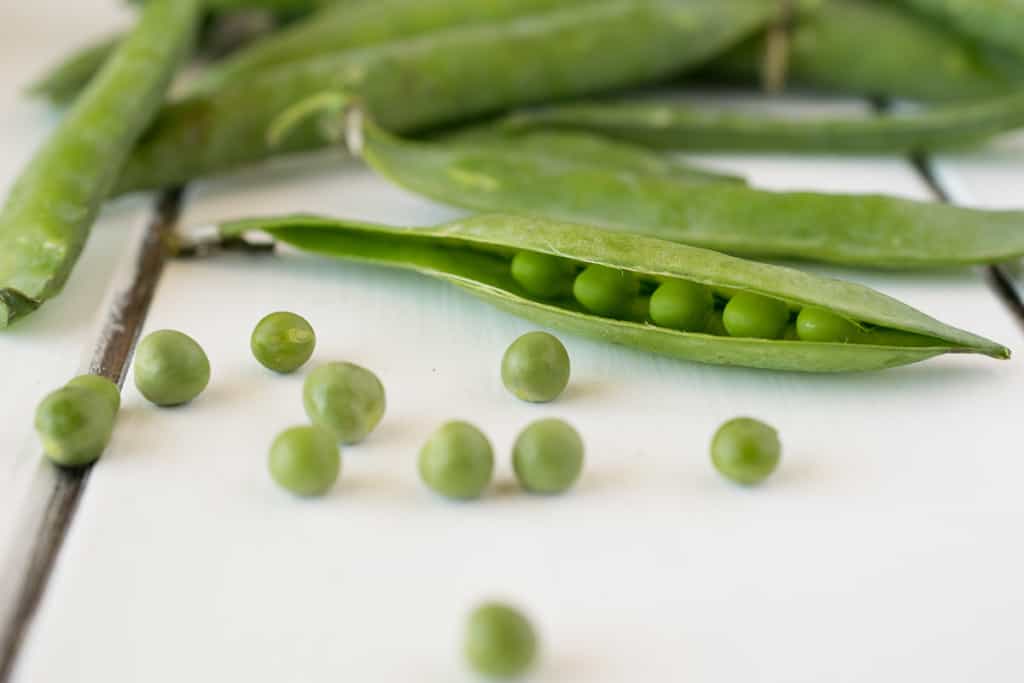
Let’s talk about those peas. If you can’t get fresh peas straight from the pod – and not everyone can – some grocery stores carry fresh packaged peas, which are the next best thing. If those aren’t available, defrosted frozen peas work just fine. I love the pop of sweetness fresh peas bring to this dish, and the lemon complements them perfectly. It’s time for a little springtime in the kitchen and on our plates.
No Garlic
You’ll see that I did not use garlic in this particular recipe. This is to let the fresh flavors of the lemon and peas shine without being overpowered.
Serving Risotto
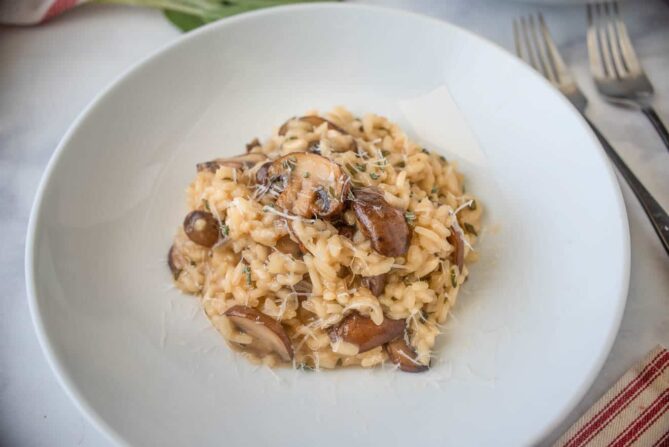
Traditionally it is served as an appetizer or a main course. This lemon and pea version is perfect for spring and summer. For cooler months, try comforting versions like Pumpkin Risotto Stuffed Acorn Squash or Brown Butter Mushroom Sage Risotto. And don’t forget – any leftovers can be transformed into Risotto Rice Balls (Arancini), one of my favorite ways to enjoy risotto again.



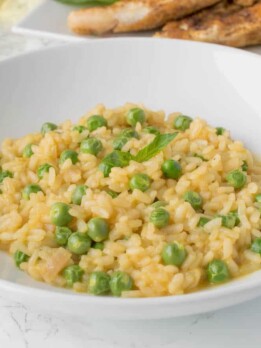
Lemon Risotto with Peas

Video
Ingredients
- 5 cups (2 ½ pints) chicken broth/stock, Vegetable stock can be used to make this dish vegetarian
- 2 tablespoons olive oil
- 1 tablespoon unsalted butter
- ¼ cup (45 grams/ 1 large) shallot, finely chopped
- 1 cup (200 grams) Arborio rice, short grain rice
- ½ cup (118 ml) dry white wine, one you would drink
- ½ cup (25 grams) freshly grated Parmesan cheese
- ½ cup (260 grams) fresh peas, boiled for 3-4 minutes or defrosted frozen peas
- 2 tablespoons Lemon zest
- 2 tablespoons Lemon juice
- Salt, to taste
- Ground black pepper, to taste
- 1 tablespoon fresh basil, chopped
Instructions
- Add the chicken stock/broth to a saucepan and keep warm it over low heat.
- In a large, deep sauté pan, heat the olive oil and butter over medium heat. Once the butter is melted and bubbly, add the chopped shallots. Cook for 3–4 minutes until softened and translucent, but not browned.
- Add the rice. Stir constantly for about 1 minute to coat the grains in the fat and toast them lightly. You'll know it's ready when the edges of the rice grains look translucent.
- Pour in the white wine, stirring constantly until the liquid is fully absorbed by the rice.
- Add one ladleful (about ½ to 1 cup) of the warm stock to the rice. Stir gently, evening out the rice so it sits flat in the liquid. Allow it to simmer gently until the liquid is nearly absorbed and the pan looks saucy. Repeat this process, adding a ladle of stock at a time and stirring frequently. Don't allow the liquid to completely absorb between additions.
- When you have about one ladle of stock left, stir 1 teaspoon of the lemon zest and all of the lemon juice into the risotto, followed by the last of the stock.
- Start testing the rice around the 15-minute mark. The grains should be tender with a tiny bit of bite in the center (al dente).
- Remove the pan from the heat. Stir in the remaining lemon zest, Parmesan cheese, and peas. Taste and season with salt and pepper (adjust based on how salty your stock is). Spoon onto plates, garnish with fresh basil, and serve warm.
Easy used paella rice added rocket too yummy
Great to hear paella rice worked, thanks for the feedback.
Looks so fresh and tasty! I love risotto. My husband loves peas… I think he would adore this dish!
There’s nothing like a good classic risotto, Janette – and I always thought you had to stir and stir it, so that’s great news that I don’t have to.
It’s funny that you call these peas ‘English peas’ over there. Are they the small, sweet ones? We call those Garden peas!
Looks so delicious! Love risotto! So fresh and easy to make ! Pinned!
Oh Janette, risotto that I don’t need to stand over and baby-sit the entire time! Sign me up! And those English peas… SO good! What a gorgeous spring dish!
Wonderful recipe ! Thanks for sharing 🙂
Thank you so much for stopping by with your kind message
So easy to make. Fresh and lemony.
So easy to make. I added fresh asparagus and it was a hit.
I love adding seasonal asparagus too. Thank you for stopping by.