

How to Make Traditional Hot Cross Buns
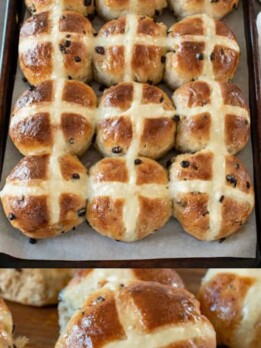
There is nothing quite like the smell of Traditional Hot Cross Buns baking in the oven. A delicious signal of the start of the Easter season and Good Friday. These classic British spiced buns are a staple for Good Friday, filled with warm notes of cinnamon, allspice, and ginger. Studded with plump currants or raisins and finished with a sweet, sticky glaze, they taste best enjoyed warm and golden brown from the oven with a generous smear of butter.
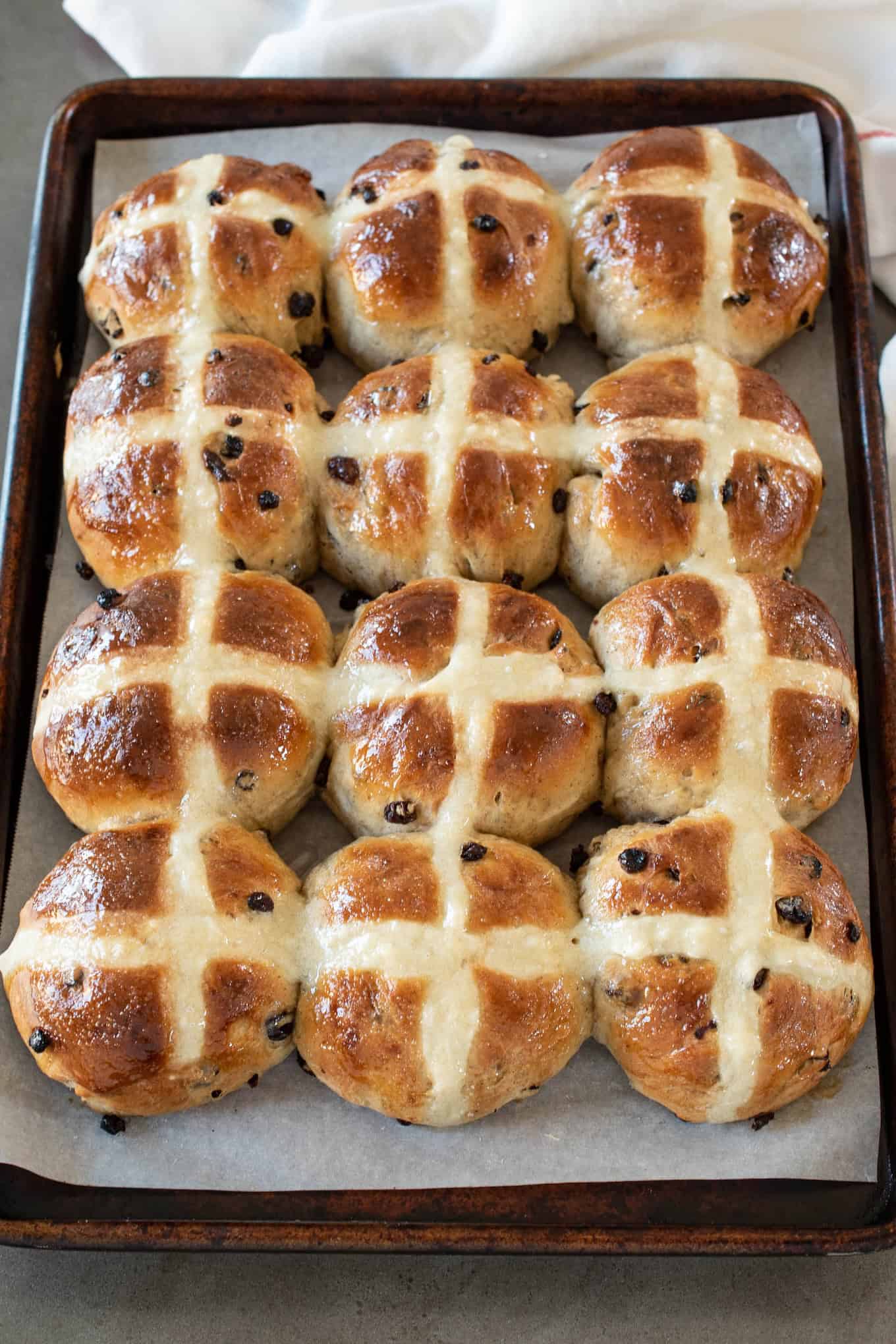
This is the same great hot cross buns recipe that I first published in 2014, with updated pictures and a step-by-step video.
Table of contents
Hot cross buns history
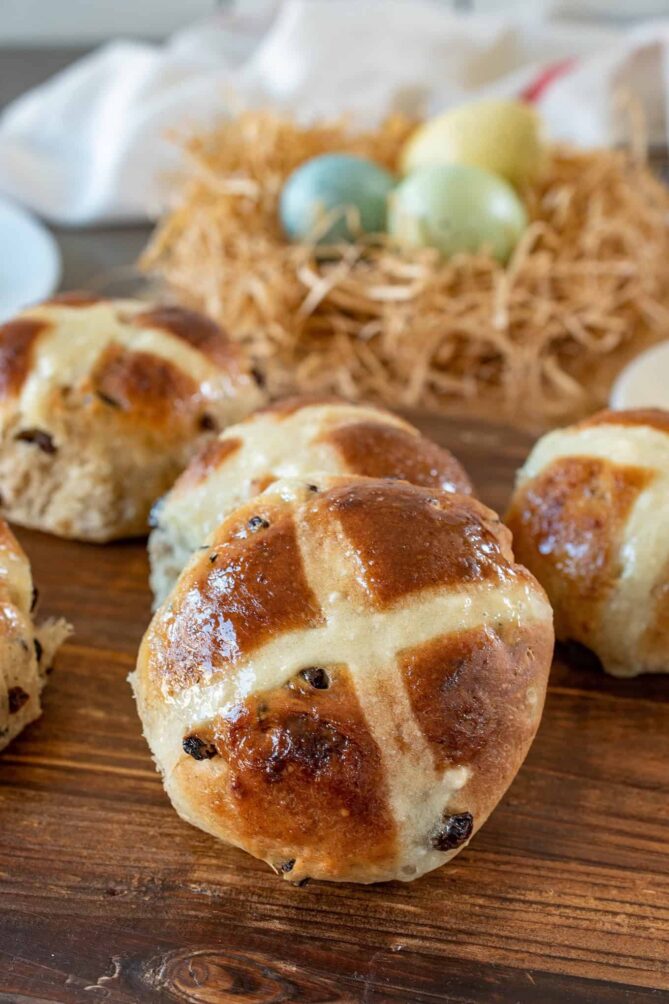
Hot cross buns have a long history in the UK and are traditionally eaten on Good Friday. These lightly spiced, fruit-filled buns are closely tied to Easter. They have been enjoyed for centuries, with roots going back to medieval England. Over time, they became a symbol of the end of Lent and were often shared among family and friends as part of the Easter celebrations.
So why are they called hot cross buns? The name comes from the simple cross marked on top of each bun before baking. Traditionally, this cross represents the crucifixion of Jesus. While the spices inside are said to symbolize the spices used in burial traditions. The word “hot” refers to the way they were originally sold – fresh and warm, often by street vendors.
A taste of tradition
In fact, nearly every child growing up in England is taught the famous Easter nursery rhyme about these buns. First published in London in 1798, the rhyme was originally a street cry used by bakers selling their fresh wares on Good Friday:
Hot cross buns!
Hot cross buns!
One a penny, two a penny,
Hot cross buns!
If you have no daughters,
Give them to your sons.
One a penny, two a penny,
Hot cross buns!
Hot cross buns dough
We all know good food takes time, so you’ll need to do a little kneading and let the dough rise. After mixing, knead the dough until smooth and let it rise in a warm spot. Once you’ve shaped the buns, they’ll need a second rise. This is to ensure they are light and fluffy before heading into the oven.
Right before baking, pipe a cross made of flour, sugar, and water across the top of each bun. As they bake, the paste sets and stays pale, making the cross clearly visible against the golden-brown bun. There’s no need to cut a cross into the dough itself. The piped paste creates that iconic look perfectly as it bakes.
Tips for the Perfect Hot Cross Buns
- Use Room Temperature Ingredients: For the best rise, make sure your eggs and butter are at room temperature. Cold ingredients can “shock” the yeast and slow down the proofing process. If you’re in a hurry, place cold eggs in a bowl of warm water for 5 minutes and cut the butter into small cubes to soften quickly.
- Check Your Yeast: Before you begin, make sure your yeast is fresh. To test it, stir the yeast into your warm milk with a pinch of sugar and let it sit for 5–10 minutes. If it becomes bubbly and foamy, it’s alive and ready to go! If nothing happens, it’s best to start over with a fresh packet.
- Don’t Kill the Yeast: When warming your milk, make sure it is lukewarm (about 100°F to 110°F). If it’s too hot, it will kill the yeast; if it’s too cold, the buns won’t rise. Think “baby bath water” temperature!
- The Windowpane Test: To ensure your buns are fluffy and not dense, knead the dough until it passes the “windowpane test.” Take a small piece of dough and stretch it out thin – if you can see light through it without it tearing, the gluten is perfectly developed.
- The Perfect Cross: For a neat, white cross that doesn’t disappear, make your flour and water paste the consistency of thick toothpaste. If it’s too runny, it will bleed into the bun; if it’s too thick, it won’t pipe smoothly.
- Glaze While Hot: Brush your apricot jam or sugar glaze over the buns the very second they come out of the oven. The heat helps the glaze soak in slightly and sets it to a beautiful, professional shine.
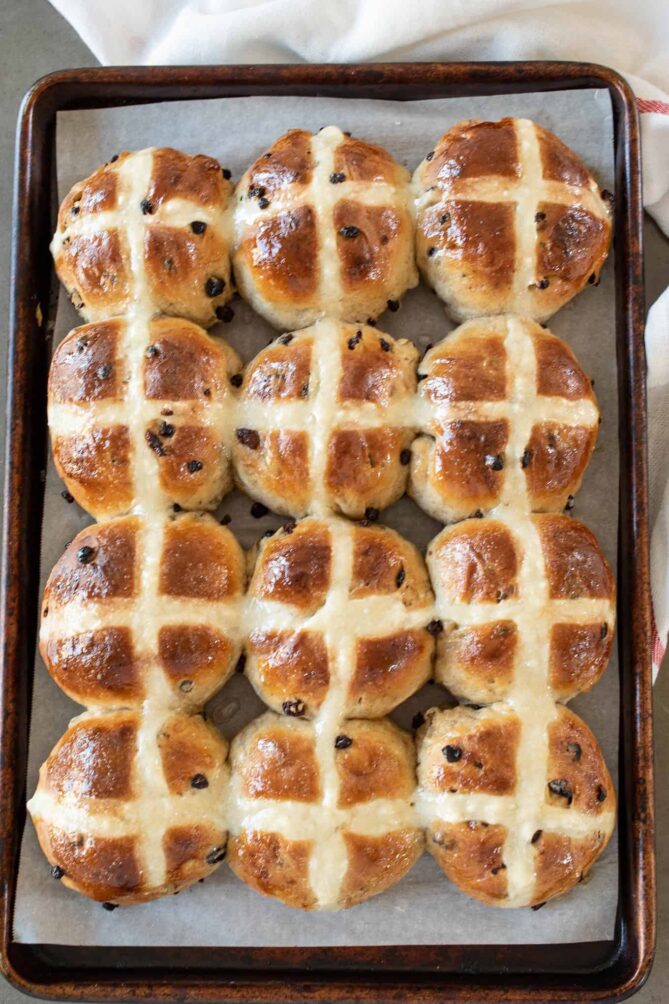
How long do hot cross buns keep?
It’s best to eat them the day you bake them or the next day. If I have leftovers, keep in an air tight container for up to 4 days. If you find the buns getting too firm, I like to microwave them (one at a time) for about 20 seconds, this will soften them up and also make them nice and warm. You can also warm them in a preheated oven to 325°F (160°C). Wrap the buns in foil and warm for 10–15 minutes. You can also, cut them in half and lightly toast them.
Hot Cross Bun Variations
If you want to move beyond the traditional currant and raisin filling, try one of these delicious twists on the classic recipe:
- Lemon & Blueberry: I also have a dedicated recipe for Lemon Hot Cross Buns with Dried Blueberries. These feature a bright, zesty citrus dough studded with sweet dried blueberries for a refreshing, modern take on the traditional bun.
- Chocolate Chip & Orange: For an indulgent treat that kids (and adults!) will love, swap the dried fruit for dark or milk chocolate chips. Adding the freshly grated zest of one orange to the dough creates a beautiful “Terry’s Chocolate Orange” flavor profile that pairs perfectly with the warm spices.
- Spiced Nut & Honey: Add a satisfying crunch by folding in ½ cup of chopped walnuts or pecans. For extra depth, replace a tablespoon of the sugar in the dough with honey—it complements the earthiness of the nuts and the punch of the ginger and allspice.
Serving suggestion
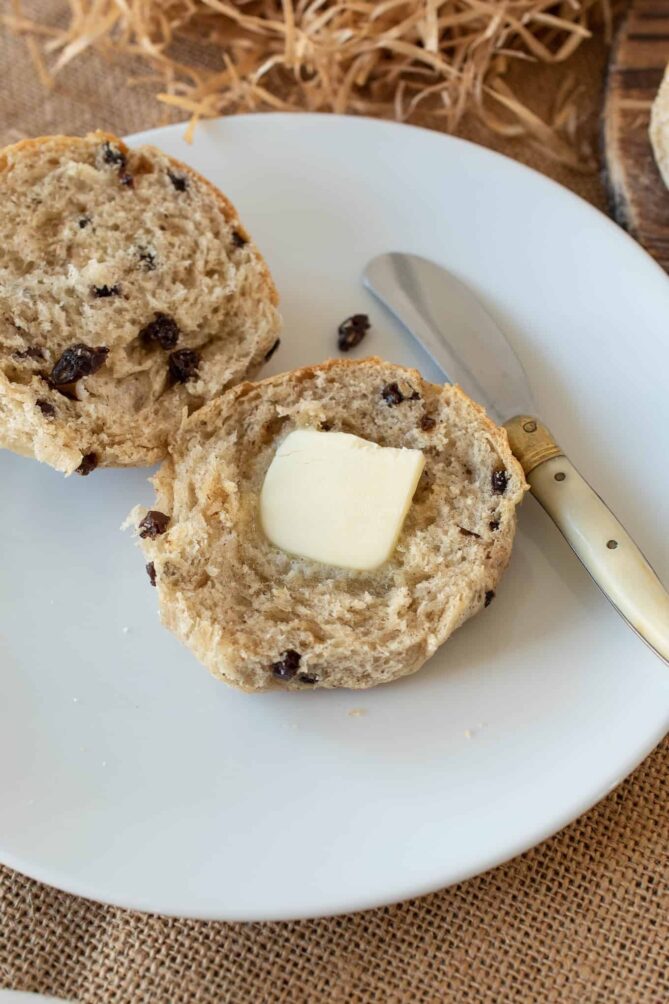
- The Classic Way: Split the buns while they are still warm from the oven and slather them with plenty of high-quality salted butter. The saltiness perfectly balances the sweet glaze and warm spices.
- The Toasted Favorite: If you aren’t eating them fresh, toast them until the edges are golden brown and the currants get slightly caramelized. This is the best way to enjoy them a day or two later! Again, with butter and jam or honey.
- The Afternoon Tea Spread: Serve them alongside a pot of English Breakfast tea. For an extra indulgent treat, offer Clotted Cream and a tart orange marmalade or apricot jam on the side.
- A Savory Twist: In some parts of the UK, it’s a tradition to serve a toasted hot cross bun with a thick slice of sharp Cheddar cheese. The sweet-and-savory combination is surprisingly delicious!
- The “Leftover” Hero: If you have any buns that have gone slightly stale, use them to make a Hot Cross Bun Bread and Butter Pudding. The spices in the buns add an incredible depth to the custard.
How to Make Traditional Hot Cross Buns

Video
Ingredients
For the buns:
- 1 cup (236 ml) milk , warmed to 100– 115 °F (38 – 46°C)
- 2 teaspoons instant dried yeast
- 4 tablespoons sugar
- 4 cups + 2 tablespoons (525 grams) all-purpose/plain flour
- 1 teaspoon salt
- 1 teaspoon ground cinnamon
- 1 teaspoon allspice
- ¼ teaspoon ground ginger
- 1 cup (150 grams) dried currants or raisins
- 6 tablespoons unsalted butter, melted
- 2 large eggs beaten, room temperature
For the cross:
- ⅓ cup (46 grams) all-purpose/plain flour
- 2 tablespoons sugar
- Warm water
For the glaze:
- 2 tablespoons powdered/confectioners sugar
- Warm water
Instructions
Make the buns:
- To a bowl, add the milk and whisk in the sugar and yeast. Allow to sit for 3-5 minutes (maybe more) until to start to see it bubble.
- To a mixing bowl add the flour, salt, cinnamon, allspice, ginger, currants or raisins, mix well.
- Make a well in the center of the flour mix, add the milk and yeast, butter and eggs. Use a spatula to mix until the dough comes together, then use your hands to make the dough to a large ball. It will be sticky.
- Turn the dough out on to a floured surface and knead for about 5 minutes, until smooth and elastic, adding small amounts of flour as needed until smooth and no longer sticky. The dough is ready when you stretch a small piece between your fingers and it thins out without tearing. You can also press your finger lightly into the dough—if it springs back slowly, it's ready.
- Place in a lightly oiled bowl, cover with a towel and leave in a warm place for about 45 mins to rise. It should double in size. The oven turned off is a good place. If it has not doubled, allow more time about 15-30 more minutes.
- Cover a large baking sheet/tray with parchment paper.
- Once risen, divide the dough into 12 balls and shape each into a bun. You can weigh them to get them all the same size if you have a scale. Place close together on the baking sheet/tray and cover loosely with a towel. Leave in a warm place for 30 minutes until doubled in size and touching.
- Preheat oven to 400°F /200°C.
Make the crosses:
- Add the ⅓ cup (46 grams) flour and sugar to a bowl and mix well. Add just enough warm water to create a thick paste. Add to a ziptop bag, remove the air and seal. Cut a little off the corner off the ziptop bag and pipe a cross on top of each bun. You can also use a piping bag. No need to score the dough, the crosses melt into the the buns as they bake. Bake for 20-25 minutes until golden brown (time will depend on your oven).
Make the glaze:
- Add the powdered sugar to a small bowl with 1 tablespoon warm water and stir until syrupy. Remove the buns from the oven and brush with the glaze while still warm. Cool the buns on a wire rack.
- To store the baked buns, keep in an air tight container for up to 4 days. If you find the buns getting too firm, I like to microwave them (one at a time) for about 10-15 seconds, this will soften them up and also make them nice and warm. You can also warm them in a preheated oven to 300°F (150°C). Wrap the buns in foil and warm for 10–15 minutes. You can also, cut them in half and lightly toast them.
To make the dough ahead:
- You can refrigerate the dough after step 4, wrap well and refrigerate, or complete step 7 and refrigerate the shaped buns, cover and refrigerate. In both cases, allow the dough to come to room temperature before continuing with the recipe. Add the crosses right before baking.
These turned really well! I printed the recipe and keeping it for future Easters. Thank you, and the video really helps.
Oh thank you, I’m glad you liked them.
Mine did not rise I tried twice made sure the yeast was good . . Kneaded enough I bake alot
This can b due to expired or dead yeast (killed by overheating liquid), an overly cold environment, or insufficient proofing time
Yum!!! Had one warm right out the oven. OMGGGGG
Haha, thank you.
Can I use a bread flour?
You can, you will probably need more milk.
Made these for the first and time …..absolutely perfect!
Thank you so much
This was delicious
Thank you
Tryed these for the first time, amazing! I know it’s trite, but they really taste like my nans. Thanks
Ha ha, yes so did I. I actually mention this in the text above.
I am not sure what I am doing wrong but when adding the active dry yeast to the warm milk and sugar, I am not seeing it bubble. I used a thermometer and it has been well over 5 minutes.
Make sure the water is not too hot (it should feel comfortable when you put in your finger) or this will kill the yeast. It also should not be too cold. Or, it could be a bad batch of yeast and it may not be alive. I hope this helps.
Made these for my grandson but he only got one as my husband and I LOVED them. I’m on my second batch for my grandson now lol.
This is a lovely compliment and I hope your grandson gets a good sharing this time 🙂
Just made your baileys Irish cream cake. Ohhhhh man my friends went wild for it. We are a bunch of foodies (including my 10 year old grandson) I’m LOVING your recipes. I was always a cook but never one for baking but since the pandemic I’m getting right into it and loving it. Thanks for all the great recipes, keep them coming. Happy Easter.
Aww, this is so nice to hear and makes me feel good about what I do. Thank you.
First time ever trying hot cross buns. They came out huge but delicious had a little problem with crosses but edible
I’m so happy you liked them and if the size worked, then there’s just more to enjoy 🙂
I made these today and halved the recipe. It worked well and very tasty indeed
That’s great to know. I’m glad you liked them.
I made these today and they were awesome. Love your recipes, never been disappointed.
Thank you so much 😊
Had my sweet 3 year old help me. She chose blueberries and dates for her fruits. We are excited to try them!
Awww, I love having little ones help in the kitchen
Don’t you use the mixer for these buns?
I prefer to make them by hand, but a mixer can be used.
This is the best recipe ever! These buns reminded me exactly of my childhood and they were flawless
Thank you so much for the kind words and feedback. They remind me of my childhood too 🙂
Great recipe. I actually made 2 batches, 1 with a mixture of cut fruit and raisins and the other without any fruit at all as a couple of my kids are not fans of the fruit. Both batches turned out fantastic and the kids were thrilled. My one daughter was especially happy as she has never enjoyed Hot Cross buns before (because of them having the fruit) and now kind of understands why they are a must have through the Easter season for the rest of us.
This is lovely to hear, thank you for sharing.
These were delicious! I kneaded for 10 minutes – at first raisins were falling out everywhere but eventually the dough came together and held the raisins better!
Glad you held on with the kneading and it worked out.
I tried this recipe , really loved it was my first attempt at hot cross buns and came out yummy
Great job Allan, I’m so happy you enjoyed them.
I made these for the first time today – Good Friday.
I am vegan, so I couldn’t enjoy these, but my 3 boys and my mom did. I loved the smell of my house while these were in the oven baking. I didn’t know ginger was an ingredient. Surprise, surprise!
I’m sorry you couldn’t enjoy them, but yeah for mom 🙂
Great recipe, although my yeast was not as fresh as it could have been, I am sure the next batch will be lovely! These are a bit stodgy due to not rising because of the yeast but they still taste amazing.
Thank you for leaving the lovely feedback. Yeast is very finicky and as you’ve learned and must be good and fresh. I hope they are better next time for you.
I’ve never made these before so i was a little nervous but the recipe is so easy to follow and they taste amazing. I’ll be making them again
I’m so happy to hear this
My new go-to for this recipe. Easy recipe and delicious I left off the cross because my picky husband is not a fan
It’s a good thing they’re just as good sans the X 🙂
Hello, I made these last week and they turned out wonderfully!!! My husband was over the moon in love with them!! Lol. I have only two suggestions. The comments about scoring the top of the buns & adding sugar to the paste are not in the directions part of the recipe. Otherwise…. fantastic!!
I’m so happy you enjoyed them, they’re my favorite too. I did notice that adding the sugar to the paste was missing from the instructions so I’ve added that back in. There is no need to score the buns before piping on the cross because as they bake, the crosses melt into them so that is why that step is not in the instructions. Thank you for the great feedback.
These were a hit for Easter brunch, thank you!
These look lovely. I will try the recipe this month. Btw, the sonf also has a verse as follows:
If you have no pennies a ha’ penny will do.
If you haven’t got a ha’ penny, God Bless you.
(Ha’ penny equals half a penny)
Thank you, I hope you enjoy them. I do believe that this verse is from a British Halloween trick or treat song.
I made your hot cross bun recipe and it is the best. I did tweak a little . I soaked 1/2 cup candied peel and 1/2 cup currants in. About 2 TBSP grand marnier liqueur. It just adds so much flavor. Thanks for sharing this awesome recipe with everyone.
I’m loving this idea. I’ll be trying it for Easter. I’m so glad you liked them.
I soaked the currants and candied chopped peel overnight in a bowl but you could just soak them for a few hours too. The alcohol will burn off when it cooks but it just adds so much flavour . Thanks again for his awesome recipe. Have a wonderful day Pam
This is all very helpful, thank you 🙂
I made these yesterday and they really are delicious. I made 12 but they are twice as large as I would use. So next time I’m making smaller buns. Thank you for this recipe.
Yummy. They look absolutely delicious. Good Friday just isn’t Good Friday without a warm hot cross bun.
You’re so right, with lots of butter. Have a lovely weekend 🙂
being from the UK ( living in the US for many years) Your hot cross buns look divine. I am also singing the song to myself as I look at your yummy treats, Hugs
Hi Katherine, same here and I sing the song too 🙂
I was so attracted to this recipe by your pictures and the recipe did not disapppoint.
Hi Tracey, thank you for stopping by. Have a great weekend 🙂
Perfect!!! This was my first time making them and they came out so great. Next batch is in the oven.
I love hot cross buns and like you grew up in England. I find the lurid crosses on the buns for sale in my local (US) stores rather off-putting. Perhaps this is the year when I’ll try making some!
The recipe looks easy will make it this week for Good Friday. Thank you very much and Happy Easter yo you!
My recipe is very popular right now and many have made them with great results. Enjoy and let me know if you have any questions.