

British Pease Pudding
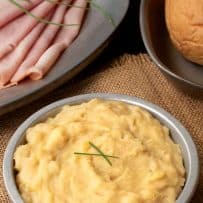
My British Pease Pudding recipe is a hearty side made with yellow split peas gently cooked with vegetables and smoky ham. It’s traditionally enjoyed in a ham sandwich or served alongside a meat dish.
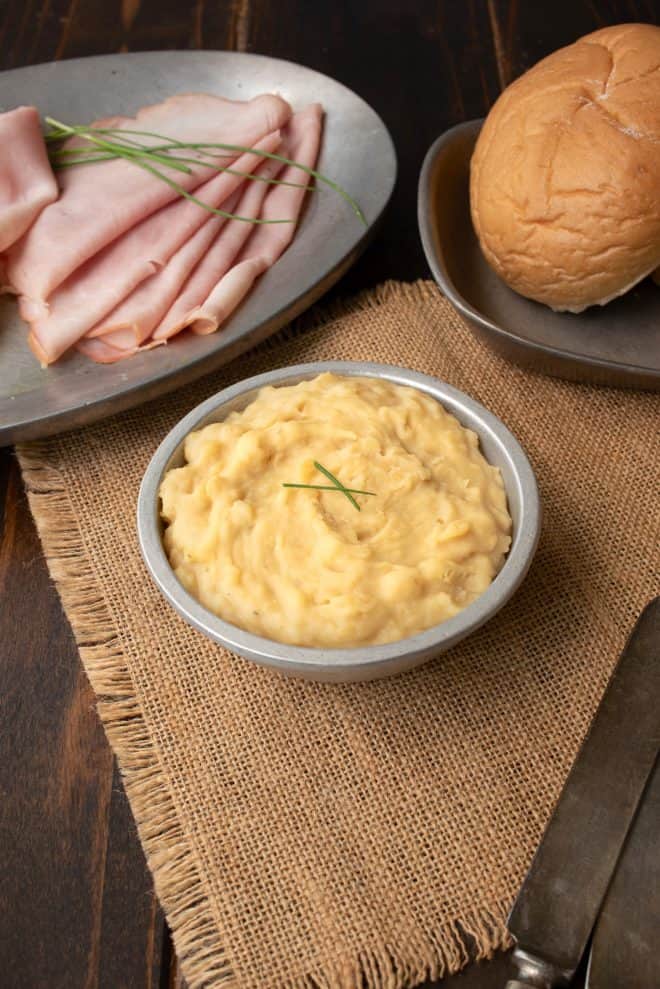
Table of contents
- What is Pease Pudding?
- Why is it called pease pudding?
- What does pease pudding taste like?
- What is the Pease Pudding nursery rhyme?
- Pease pudding history
- Ham in Pease Pudding
- Tips for cooking dried split peas
- Pease pudding hot or cold
- What do you serve with pease pudding?
- Leftover pease pudding
- Freezing pease pudding
What is Pease Pudding?
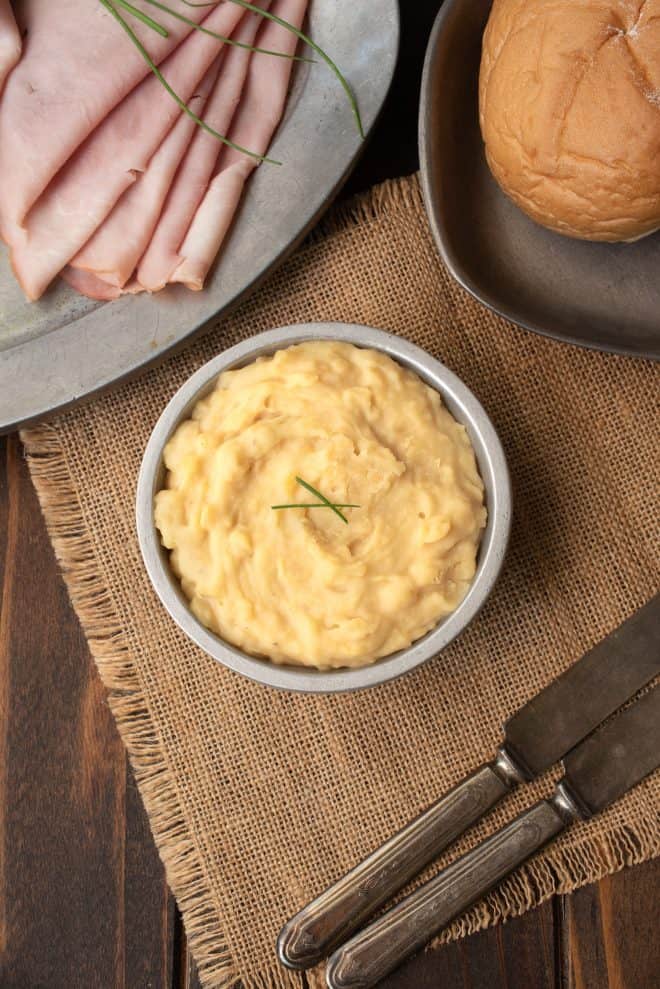
Pease Pudding isn’t actually a pudding; it’s more like a smooth puree (similar consistency to thick hummus). You make it by cooking yellow split peas with a smoked ham hock, gammon or shank and vegetables (for flavor), then blending or mashing the mixture.
Why is it called pease pudding?
This dish goes by many names—Peas Pud, ‘Tyneside Pâté,’ Geordie Caviar, and Geordie Hummus. And yes, the word really does have an ‘e’ at the end of pease (though no one’s quite sure why). It’s also been called Pease Porridge or Pease Pottage. More on this below.
What does pease pudding taste like?
It is a little smokey flavor, savory earthy, and a little meaty. Yellow split peas, which have a different, more subtle taste than fresh green peas.
Don’t confuse Pease Pudding with Mushy Peas,. This native dish from the North East of England dates back to the 14th century and even has its own rhyme.
What is the Pease Pudding nursery rhyme?
Pease pudding hot, Pease pudding cold, Pease pudding in the pot nine days old. Some like it hot, some like it cold, some like it in the pot, nine days old.

Pease pudding history
Pease pudding is a dish with deep historical roots in the UK. Its origins can be traced back to the Middle Ages.
- A Staple of the Past: Before the widespread adoption of potatoes in Europe, dried legumes like peas were a crucial and affordable source of sustenance. Pease pottage, essentially a porridge or thick soup made from dried peas, was a fundamental part of the diet for people of all social classes.
- The Shift from “Pottage” to “Pudding”: The name changed over time, especially with the invention of the “pudding cloth” in the 16th and 17th centuries. This muslin cloth allowed the peas to be cooked in a pot alongside other foods (like a ham joint) without mixing, resulting in a more solid, purée-like “pudding” rather than a watery “pottage.”
- A Regional Delicacy: While once common throughout Britain, pease pudding has a particularly strong association with the North East of England. With a particular connection to the Stockton and Darlington railway. It is a traditional accompaniment to ham or a key ingredient in local dishes like the “saveloy dip.” The famous nursery rhyme “Pease Porridge Hot” also speaks to its long-standing place in British culture.
- Global Relatives: Similar pea-based dishes can be found in other cuisines around the world, such as the German Erbspüree (often served with ham hock) and the Greek fava (made from yellow split peas). This shows how the humble pea has been a global source of nourishment for centuries.
Ham in Pease Pudding
Interestingly, some recipes don’t call for the use of ham broth to cook the split peas, including my own mother’s.
Cooking it this way gives a great depth of flavor and once you try it this way, I think you’ll prefer it too.
The ham shank only flavors the broth. Once you have used it, you can save it to use the ham for Ham & Split Pea Soup.
Alternatively, if you don’t want to use ham at all, simply skip steps 2, 3, and 4 of the recipe and cook the peas in plain water.
Tips for cooking dried split peas
1. No soaking needed
Unlike beans, split peas don’t require soaking. They cook relatively quickly (about 25–45 minutes, depending on the recipe).
2. Rinse first
Always rinse split peas under cold water to remove dust or debris. Check for small stones, too.
3. Liquid ratio
Use about 4 cups of liquid per 1 cup of dried split peas. They absorb quite a bit and thicken soups nicely. Add more liquid later if you want a thinner consistency.
4. Flavorful cooking liquid
Instead of plain water, simmer peas in vegetable stock, chicken stock, or ham broth for richer flavor. Toss in an onion, garlic, or bay leaf at the start.
5. Avoid early salt or acid
Adding salt, tomatoes, vinegar, or lemon too early can toughen the peas and slow cooking. Wait until the peas are soft before seasoning with salt or acidic ingredients.
6. Skim foam
As they start to boil, you’ll notice foam rising to the surface. Skim it off for a cleaner taste.
7. Gentle simmer, not a boil
Boiling too hard can cause the peas to split unevenly and turn mushy outside while staying firm inside. A gentle simmer ensures creamy consistency.
8. Stir occasionally
Split peas thicken as they cook and can stick to the bottom of the pot. Give them a stir now and then, especially toward the end.
9. Cook until creamy
Yellow and green split peas should become tender and creamy. If they’re still chalky inside, keep simmering with a little extra liquid.
Pease pudding hot or cold
The choice is yours (as the nursery rhyme suggests). It is perfect served cold, room temperature or hot. But, I wouldn’t keep it for 9 days, may up to 7.

What do you serve with pease pudding?
Traditionally, people serve Pease Pudding in a ham sandwich roll (usually Stottie bread, see picture above), with a saveloy (a British pork sausage) or as a side dish with slices of ham. You can serve it warm or cold. Personally, I like it warm or room temperature because the flavors are better which makes it portable for road trips and picnics.
Leftover pease pudding
It actually tastes better the next day as all the flavors ‘marry’. In a sealed container refrigerated, it will keep for 5 to 7 days. You can also blend with chicken stock/broth to make a smoky lentil soup.
Freezing pease pudding
Freeze in a well sealed container for up to 3 months. Defrost in the refrigerator.
British Pease Pudding

Video
Ingredients
- 1 ½ cups (300 grams) yellow split peas, rinsed
- 1 ½ pounds (711 grams) Ham hock/shank/ham bone or smoked bacon
- 2 carrots, peeled
- 1 onion, peeled
- 2 bay leaves
- ½ teaspoon salt, or to taste
- 2 tablespoons unsalted butter
Instructions
- Add the split peas to a bowl and cover with water, make sure they are well covered. Leave overnight, or 8 hours to soak at room temperature.
- To make with ham (if not using ham, skip to step 5)
- Add the ham hock/shank/bone or smoked bacon, carrot, onion, bay leaves, to a pan and cover with 3 liters (12 cups) water. Bring to a simmer and simmer for 1 hour.
- After 1 hour, remove the ham shank/hock, vegetables and bay leaves.
- To a pan, add the split peas and pour over enough of the ham broth (or water if not using ham) to cover by about 1-inch (2.5cm), about 4 cups (1 liter). Bring to a boil and simmer for 1 hour.
- After 1 hour, check to make sure the peas are soft. If not, continue to cook until they are, you may need to add more liquid as needed.
- Once soft (you want almost no liquid left). If you have too much liquid left, continue to cook, then stir in the butter and salt (this will depend on how salty your ham is so start off with only a little) . Mash or use a blender to achieve your desired consistency. Note: It will thicken as it cools. Taste for seasoning.
I take any leftover pease pudding and add a few tablespoons biscuit mix. some chopped onion and make fritters. you can add chopped meat if you want. A great snack or a quick lunch.
Sounds delicious, thank you for sharing.
We make this in the Canadian province of Newfoundland as part of our Sunday Jiggs Dinner – soak peas overnight and then in the morning drain and put in a pudding bag. Bag goes in a large stock pot filled with boiling water that already has a large portion of either trimmed naval beef (salt beef) or salt pork ribblets. Meat is also soaked over night (separate from pease of course). Boil the meat for an hour before adding your pudding bag of pease, tie pudding bag to pot handle so it doesn’t sink and stick to the bottom. If you do now have a pudding bag the same can be accomplished with any clean cotton bag like a corner of a pillow case, or several layers of cheesecloth. Simmer with salt meat 2 hours. Add cabbage (quartered), continue to simmer 30 mins, add carrots (peeled and halved) and turnip – this might be called rutabega depending on your location – (peeled, halved and sliced about 1/4 inch thick), continue to simmer 30 mins, add potatoes (peeled and halved), continue cooking until potatoes are desired tenderness.
Scoop out your boiled veggies and meat, remove pudding bag, put the please in their own separate bowl and whisk in butter, salt and pepper for your pease pudding!
Serve with roast of choice (chicken, turkey, beef, moose, etc) and gravy (make sure to use some of the pot liquor from the meat and veg in the gravy!)
Without a roast is good too, just make sure there’s plenty of salt meat to go around for the protein! Usually we’ll do without the roast if having this as a “boil up” outside in the country for a picnic, or while camping!
Thank you for sharing
Eaten regularly in childhood on Tyneside, and been making my own for 40 years! From poor man’s food to health food.
Rarely buy a ham or gammon joint without making Pease Pud. Butchers up here used to sell bacon bones, or a bacon knuckle, to make soup or Pease Pudding, but haven’t seen either for a few years. I add an onion and bay leaves to whatever bacon/ham I’m cooking, tie yellow split peas in muslin (a clean tea towel works) and when cooked blitz in food processor, adding butter.
Love it with ham, pork, or sausages.
Grew up in London & my Dad would make Pease pudding but he would put the split peas in a muslin square with a potato, tie up the four corners and boil then simmer in ham broth. Don’t know how long he cooked it, but it was always delicious served with whatever meat we had, usually ham.
I live in Durham …am 75 and have cooked pease pudding for many years. never added vegetables, but always use ham stock. I add a good portion of butter, salt & pepper and also a raw egg, beaten into the pud when hot( must beat well to stop the egg from curdling)…absolutely scrumptious!
Boiled ham or Savaloys and pease pudding was very common in East London when I was a child.
We used to have it for lunch on Saturdays and ate it hot on plates, never in bread.
Pease pudding was the same consistency as mashed potatoes and must have been mashed as there were no lumps.
You probably grew up.near me Lol!
I went yesterday and bought a ham hock , soaked split peas overnight and bought fresh bread buns, wish it was a Scottie cake and when it cools I’m going to have a ham and peace pudding in a bun .
Live in Australia, you can’t buy it ready made over here.
Same here, I live in the U.S and pease pudding doesn’t even exist. Enjoy.
Just seen a recipe with it served with a large lamb chop, and had malt vinegar stirred into the pudding, immediately before serving, looked good enough to try soon?
Don’t know where Saveloy in the NE derives from, it’s been nationwide in UK chip sops since Adam was a lad. Many legume recipes in UK, pre-date the arrival of potatoes!!!!
Apologies, Pork Chop!!!!
Also delicious with faggots and creamed potatoes ….
A very long time ago, “pease” meant a single legume seed, what we would now call a “pea”; in fact, the same word apparently served as both singular and plural. In more recent centuries, a sort of folk etymology took hold and refashioned the use of the word to make it similar to other English nouns, so “pea” was created as a singular, and “peas” (with the “e” dropped) became the new plural.
I live in New Mexico and I’ve never made this before and was wondering if it can be made in a slow cooker/crockpot?
I would appreciate any suggestions.
Please and thank you,
If I were to make this in the slow cooker, I would soak the split peas overnight. Then add everything to the slow cooker and cook on low for 6-8 hours. I hope this helps and please come back and let me know how it turned out. Enjoy.
Yes you can.I live in the North east of UK. I make it regularly in my slow cooker. Give a good stir after a few hours. You can make it on high or low. We don’t add veg never have done, but do add butter at the end. When this is cooked it is thick but still thin enough to run. Once cold it goes solid but a soft solid. Very nice 👌
I don’t ever remember my nana putting veg is any of her pease pudding recipes but I can’t find her original one does anyone have or know the original pease pudding recipe I’ve always eaten it spread on bread & butter I’ve been craving it for years? I live in the north of the uk too
My Gran came from Durham and always put a potatoe in her Pease Pudding,, this was during the war years so may have done this because of the lack of butter being unavailable.
Cooked it yesterday, very nice; I have also made a modified version of the recipe to cook in my ‘Sage Fast Slow Go’ (type of instapot) which has also been a success as there is no soaking involved.
I’m a native Tynesider with another serving suggestion. Fry up some bacon and just before it fully cooked add a large tablespoon of pease pudding to the pan and heat it through in the shallow bacon fat and allowing it to crisp on the outside. Then serve it hot with the bacon in your sandwich. Delicious. My favourite way to eat it. Yum!
That sounds delicious and sounds like something my family would make. Thank you for the suggestion 🙂
I,m also from NE. I love it on toast.
Ham shank 110% never heard of it any other way other than not using it at all for vegetarians. Personally I put hint of garlic and ginger in mines but thays beauty of pease pudding its each to there own.
Thank you for garlic and ginger suggestions, I’ll give that a try 🙂
Never ever use smoked ham or shank to make peas pudding. Use boiled ham. Remove the ham when cooked, pour in your yellow split peas and leave to simmer for a couple of hours. Then blend it with an immersion blender stick. Then put a few dice sized pieces of ham into the pud and let it cool overnight. Nothing more complicated than that.
I’m not sure that you can say that considering that my Nana would make this recipe different to someone else’s, but thank you for your version.