

Salmon Fish Finger (Fish Stick) Sandwich
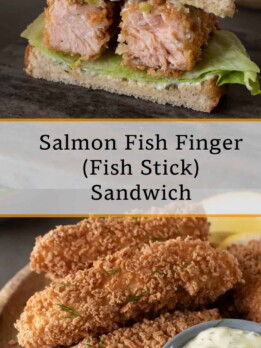
The humble homemade fish stick just got an upscale glow-up. By swapping standard whitefish for salmon, these Salmon Fish Finger Sandwiches are a hit for both kids and adults alike. Coated in crispy panko for the ultimate crunch and paired with a bright, tangy homemade tartar sauce, this is the ultimate quick, luxury comfort food.

Table of Contents
What are Fish Fingers?
Better known in the US as fish sticks, they are fried and breaded pieces of fish. I grew up eating them in sandwiches (the frozen fish kind) and they were always served on white bread with tomato ketchup. That’s also an option for you if that’s your thing!
The Key to a Better Crunch
It’s quite simple. Always use Panko breadcrumbs! While regular breadcrumbs work in a pinch, they simply cannot compete. Widely used in Japanese cooking, these flakes are larger and airier, resulting in a lighter, cleaner crisp that doesn’t get soggy.
Quick Homemade Tartar Sauce
A proper fish sandwich needs a great sauce, and this one is miles ahead of any store-bought jar. It takes minutes and relies on just five simple ingredients: a base of creamy mayonnaise, fresh lemon juice and salt. Then all brightened up with tangy pickles, capers, and fresh dill. Perfect for dipping too.

From Wimbledon to your Weeknight Dinner
In England, fish fingers are a childhood rite of passage. They are the ultimate, fuss-free favorite that kids look forward to eating – especially piled high between two thick slices of buttered white bread. But you don’t have to be in the UK to appreciate the magic of a proper fish finger sarnie.
This simple sandwich even has a brilliant high-low factor. When you think of Wimbledon, you probably picture traditional Pimm’s Cup, Strawberries and Cream, and pristine elegance. Yet, right alongside those upscale classics, Wimbledon serves a wonderful nod to British comfort food, like this sandwich.
This recipe takes that exact nostalgic, court-side concept and gives it a serious flavor makeover you can whip up at home for a quick weeknight dinner.

Salmon Alternatives
If you want to switch things up or don’t have salmon on hand, you can make traditional fish sticks/fish fingers. Any firm white fish will work beautifully. Haddock and cod are the absolute classic British choices for a traditional fish finger sarnie. They offer a mild flavor and a flaky texture that pairs perfectly with the panko coating.
Other great alternatives include halibut, pollock, or mahi-mahi – just look for fillets with a similar thickness so they cook evenly.
Make them Gluten-Free
You don’t have to miss out on the amazing crunch if you are avoiding gluten. Doing this is very simple and requires just three quick swaps:
- The Panko: Standard panko is made from wheat bread, but gluten-free panko breadcrumbs are widely available in most grocery stores today. They are typically made from rice flour and deliver that exact same giant, airy crispiness.
- The Flour: Swap the all-purpose flour for any 1:1 gluten-free baking flour blend. Its main job is simply to help the egg adhere to the salmon, so cornstarch or arrowroot powder also work beautifully here.
- The Bread: Serve your crispy salmon fish sticks on your favorite gluten-free artisan white bread or brioche buns. Just be sure to give the bread a nice, golden toast to help it hold up to the tartar sauce!
How to Make the Best Homemade Fish Sticks
Tender, fresh salmon pieces are coated in the crispy breadcrumbs, then shallow fried (or baked, if you prefer). The fish sticks are then nestled between two slices of artisan bread and topped off with my homemade tartar sauce and crispy iceberg lettuce. The end result is so fantastic this just might become your new favorite fish sandwich. I know it’s now mine!
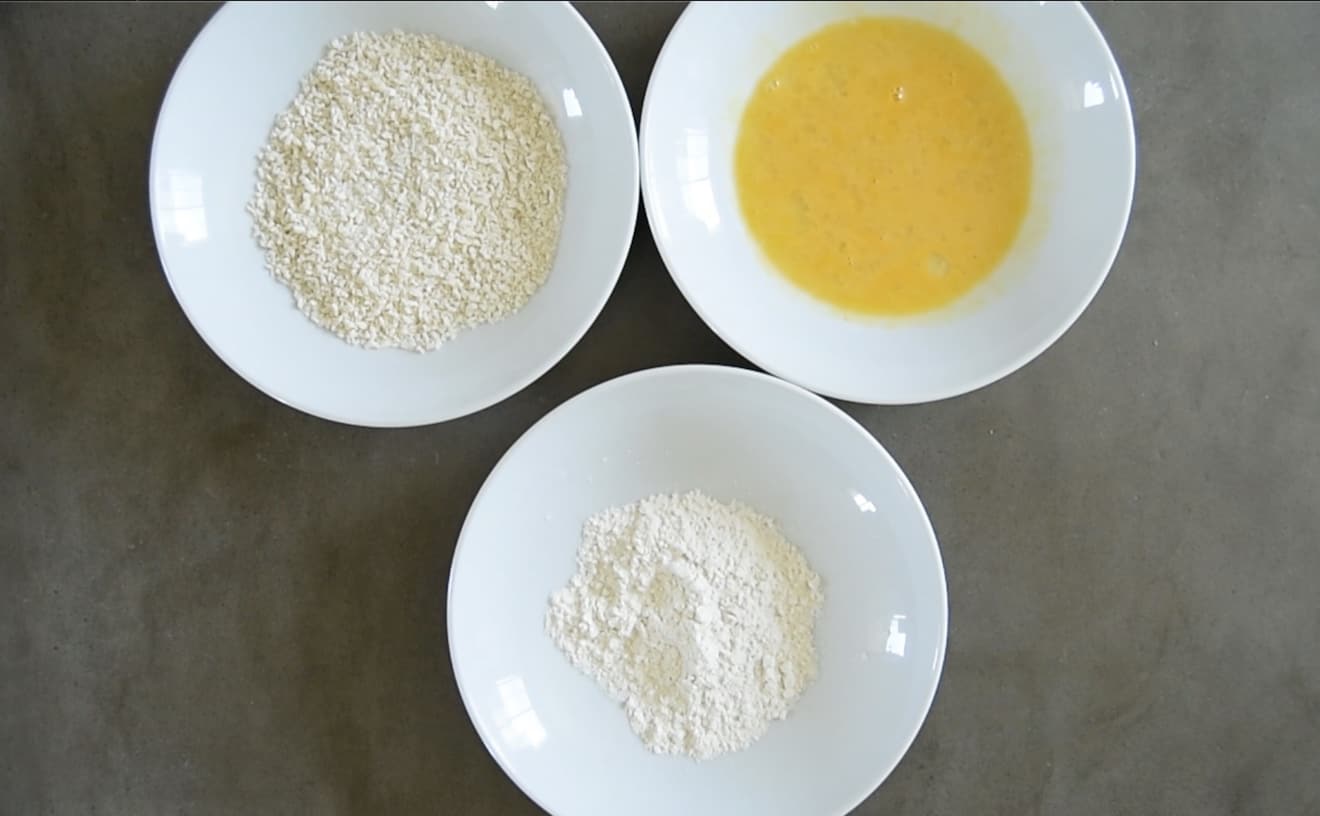
- Set up your station: Start by adding the flour, egg, and breadcrumbs to three different shallow bowls. Season each bowl with a little salt.
- Prep the fish: Slice the salmon into 12 even fingers/sticks (three per person).
3. Flour: Take your salmon pieces and first coat lightly in flour and lightly shake
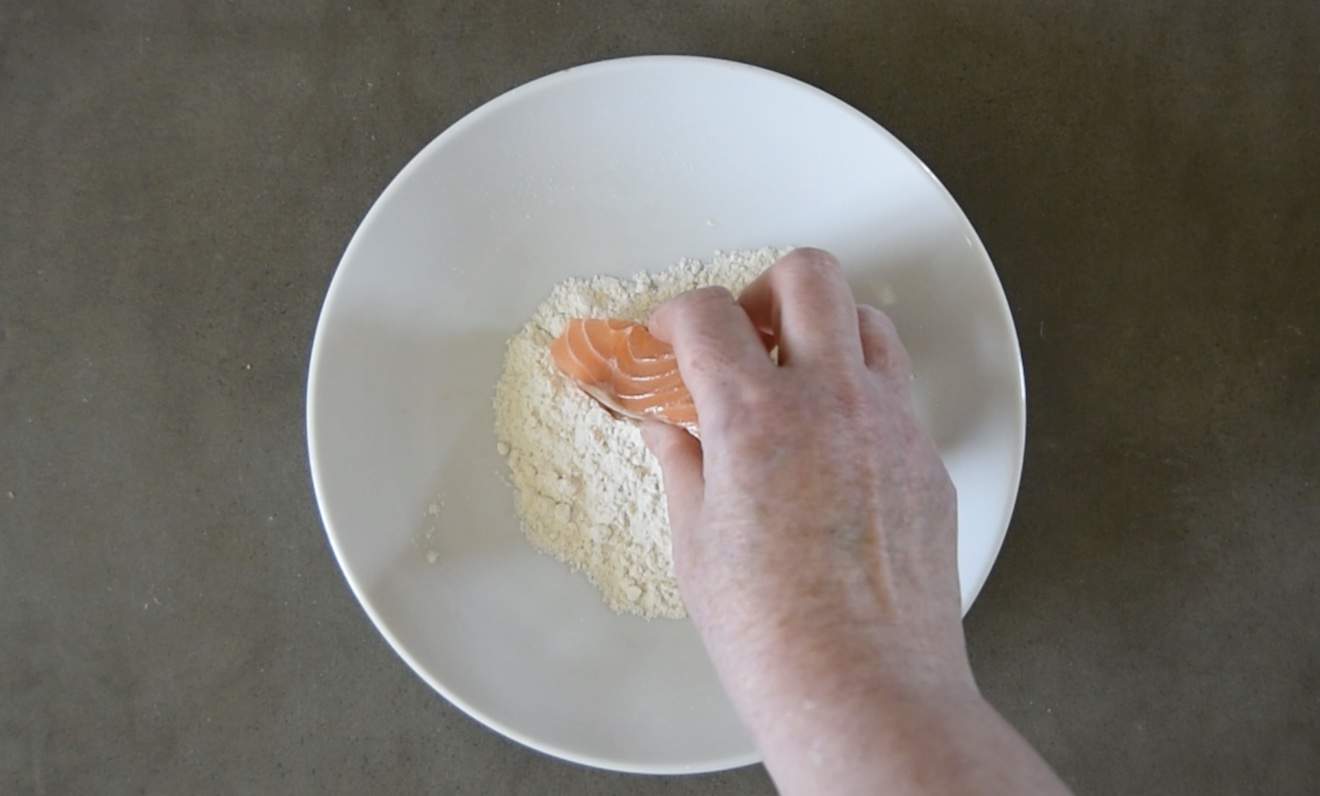
4. Dip the flour-coated salmon piece in the egg, allowing any extra to run off.
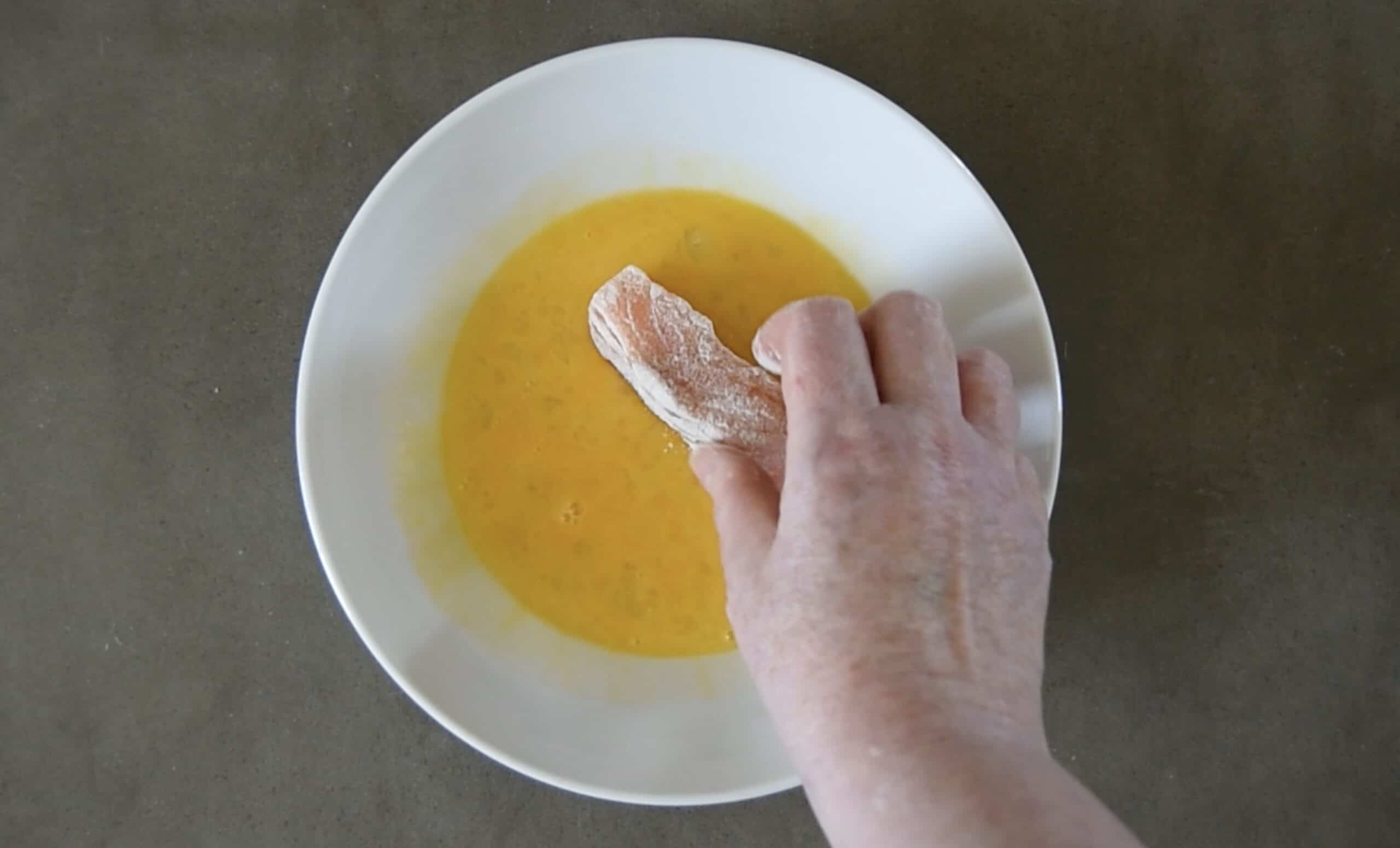
5. Coat well in the breadcrumbs, pressing gently so they adhere.
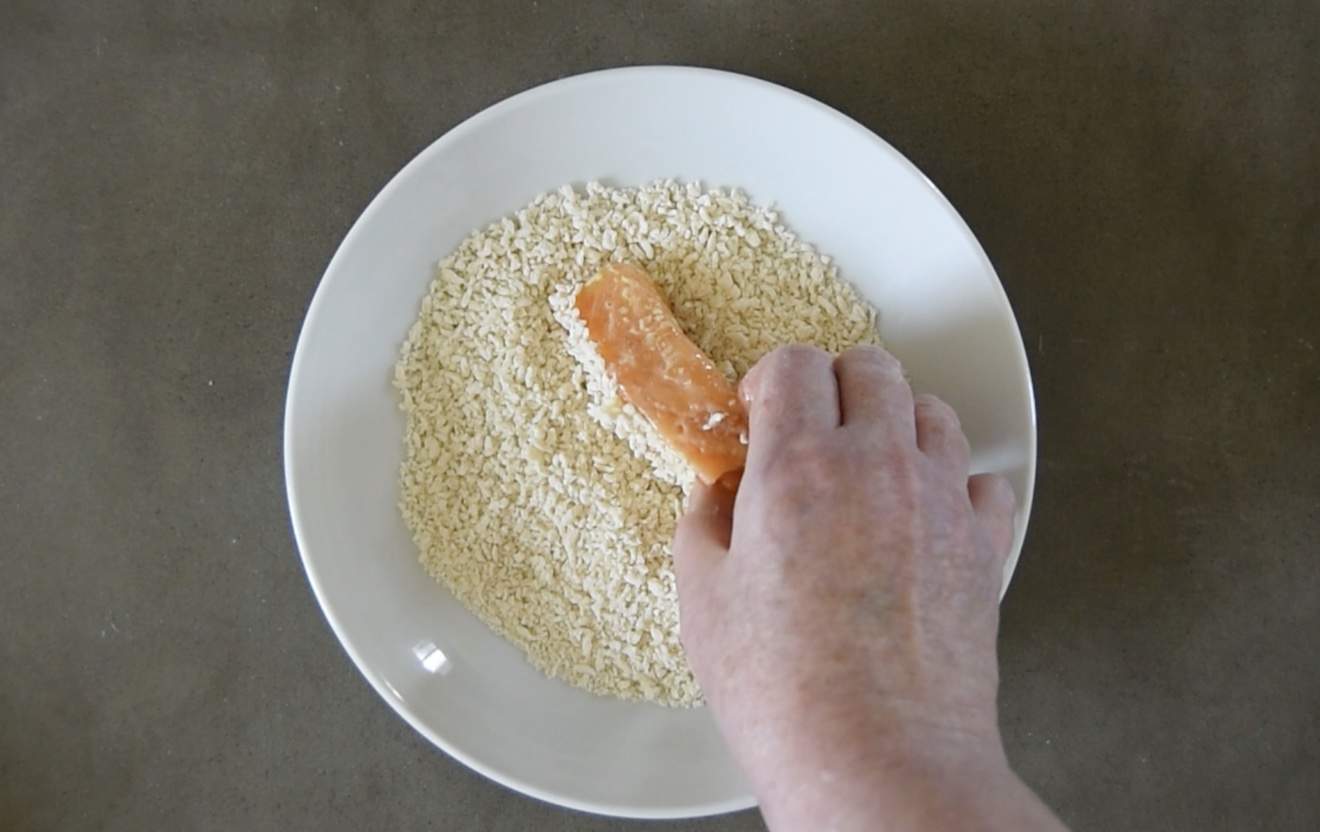
5. Shallow fry (with oil added about a third of the way up the pan) in hot oil until golden brown on each side.
To Bake: Bake them at 450°F/230°C for around 10 minutes until golden brown.
To Air Fry: Pop them in your air fryer basket at 400°F/200°C for about 8 to 10 minutes, flipping halfway through, until they are perfectly golden and crispy.

What do you serve with Fish Fingers/Fish Sticks?
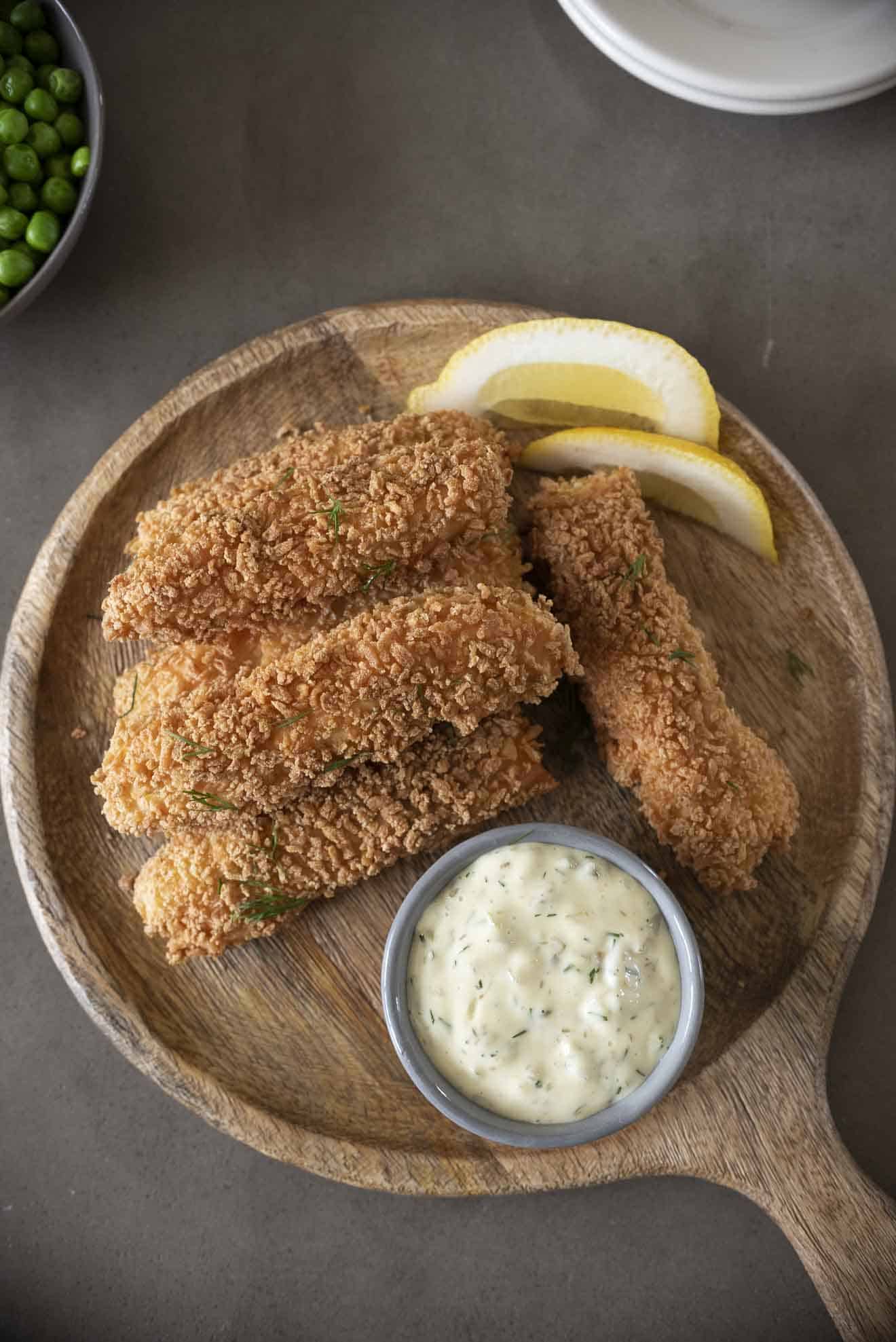
They don’t have to be eaten in a sandwich! Serve them with a side of my homemade tartar sauce alongside fresh or mushy peas, and you have a complete meal.
Another key to the best-tasting fish finger sandwich is that homemade tartar sauce. It doesn’t have to be complicated—my version has only five simple ingredients (plus a pinch of salt). The real secret to the flavor is the combination of pickles, capers, and fresh dill.
Of course, you can always go the nostalgic route. I grew up eating frozen fish finger sandwiches, and they were always served on white bread with tomato ketchup.
Can you use Canned/Tinned Salmon?
You could… but you would need extra ingredients (like binders) to help hold them together, turning it into more of a salmon cake that you’d have to shape into fingers. For this classic crunch, fresh salmon is absolutely key.
Freezing and Reheating
Once fried, allow to completely cool, then wrap them well and freeze for up to 3 months.
When you’re ready to eat, you can reheat them straight from frozen! Pop them into the oven at 400°F/200°C for 12–15 minutes until they are heated through and crispy again. Alternatively, you can defrost them in the fridge overnight and bake at 350°F/177°C for about 10 minutes.
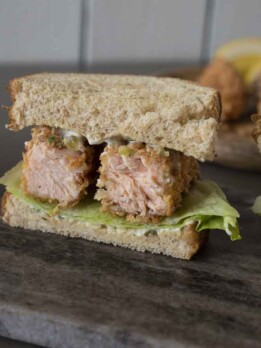
Salmon Fish Fingers (Fish Stick) Sandwich

Video
Ingredients
For the tartar sauce:
- ¾ cup (140 grams) good mayonnaise
- 2 tablespoons fresh lemon juice
- 2 tablespoons pickled gherkins/pickles
- 1 tablespoon capers, chopped
- 1 tablespoon fresh dill, chopped
- Salt to taste
- 2 pounds (1 kg) fresh salmon, skin removed *see note, Thick cut/center cut is best
- ¼ cup (30 grams) all-purpose/plain flour
- 2 large eggs, beaten
- ¾ cup (50 grams) Panko breadcrumbs
- Vegetable oil for frying
- Iceberg lettuce slices
- 8 thick slices of artisan bread
Instructions
Make the tartar sauce:
- In a small mixing bowl, combine the mayonnaise, fresh lemon juice, chopped pickles, capers, and fresh dill. Season with a pinch of salt to taste, mix well, and set aside in the fridge so the flavors can meld.
Prep the Salmon and Breading Station:
- Slice the salmon into 12 even, finger-shaped sticks (allowing 3 per sandwich). Set up three separate shallow bowls in a row to create an easy assembly line: one for the flour, one for the beaten eggs, and one for the breadcrumbs. Season each bowl with a small pinch of salt.
Coat the fish:
- Preheat your oven to a low, warm setting and place a wire rack inside a large baking sheet; this keeps the cooked sticks perfectly crisp while you fry in batches. One by one, dip a piece of salmon into the flour (shaking off any excess), submerge it in the egg (letting the extra drip off), and press it firmly into the Panko until completely coated. Repeat for all 12 pieces.
Fry until golden:
- Fill a large skillet about one-third of the way with vegetable oil and place it over medium-high heat. To test if it's ready, dip the handle of a wooden spoon into the oil—if it bubbles steadily around the wood, you are good to go. Fry the salmon fingers in batches to avoid crowding the pan, cooking for about 3 to 4 minutes until the bottom is beautifully golden. Flip carefully and brown the other side for another 2 to 3 minutes.
Hold and Assemble:
- As each batch finishes, transfer them to the wire rack in the warm oven. To assemble, lightly toast your artisan bread slices. Spread a generous, even layer of tartar sauce on both sides of the bread, place a bed of crisp iceberg lettuce on the bottom slices, and top each with three hot salmon fingers. Close the sandwiches, slice in half, and enjoy immediately.