

How to Peel (Blanch) Almonds
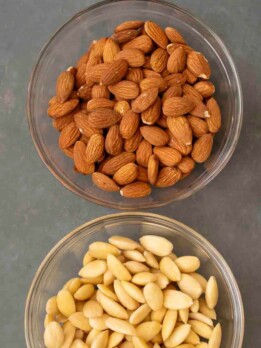
While you might not need to skin nuts every day, knowing How to Peel (Blanch) Almonds is one of those essential kitchen skills that saves the day when a recipe calls for it, or when you just prefer a smoother snack.
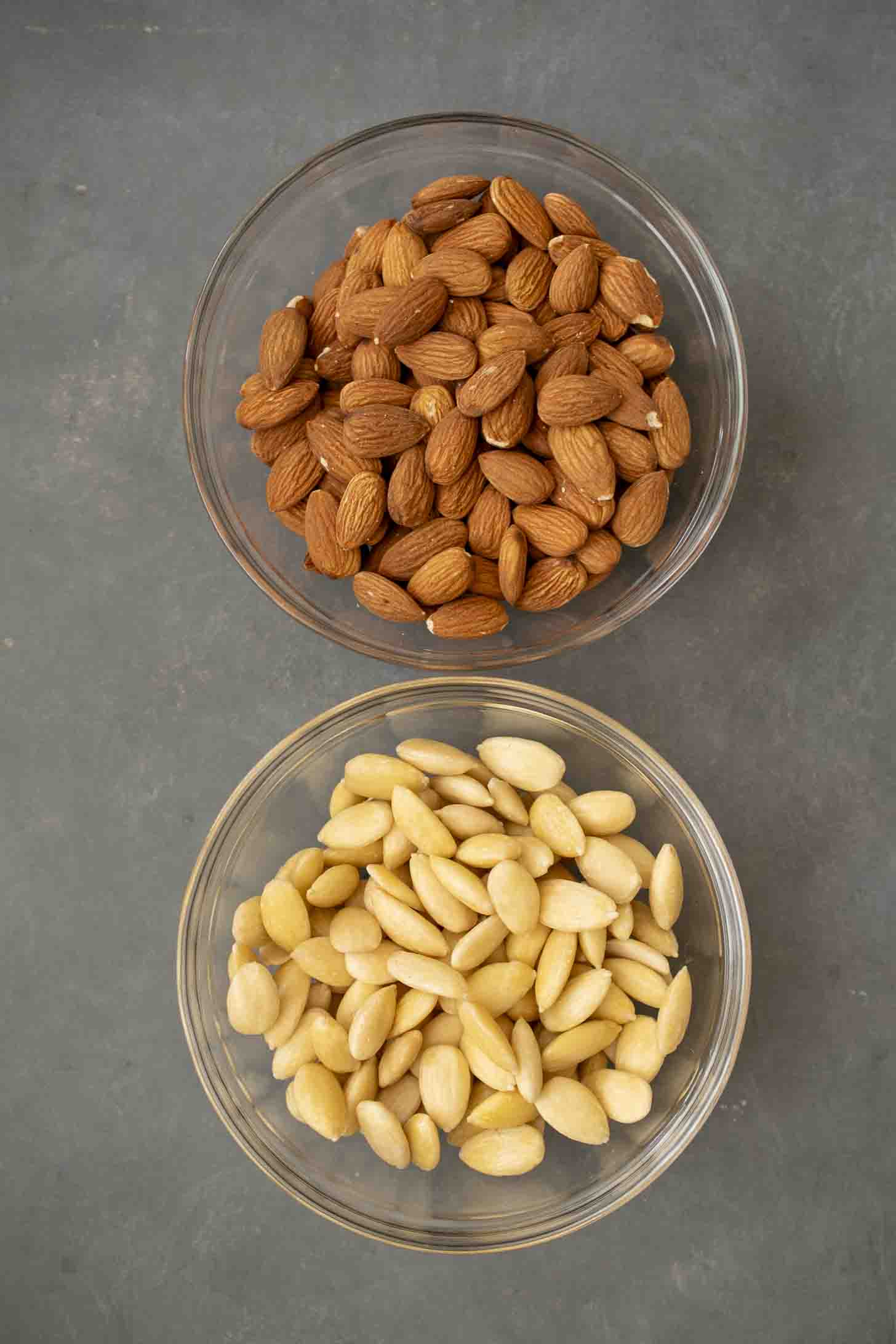
Table of Contents
What is Blanching?
Blanching is a quick kitchen technique where you briefly submerge food into boiling water, then immediately rinse with cold water or plunge into an ice bath to stop the cooking process.
For vegetables like Green Beans, this locks in a vibrant color and crisp texture. For fruits and nuts, the sudden heat expands the outer skin, allowing it to slip right off with ease.
How to Peel (Blanch) Almonds Step-by-Step Guide
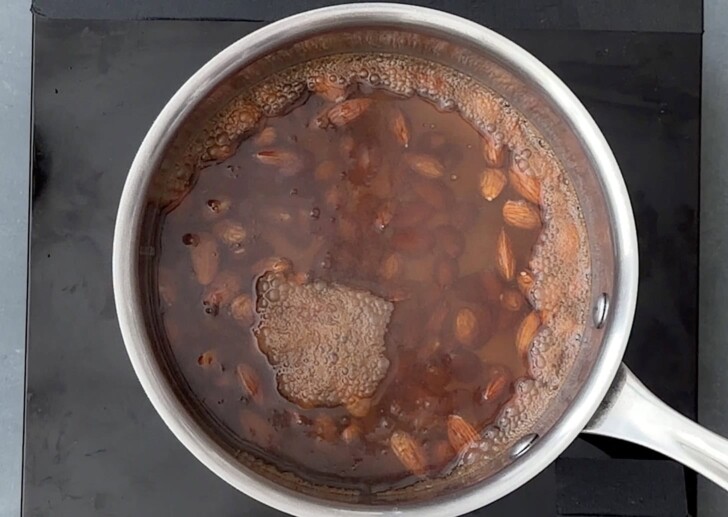
Step 1: Bring a small saucepan of water to a rolling boil. Add your raw almonds and boil for 1 minute (no longer).
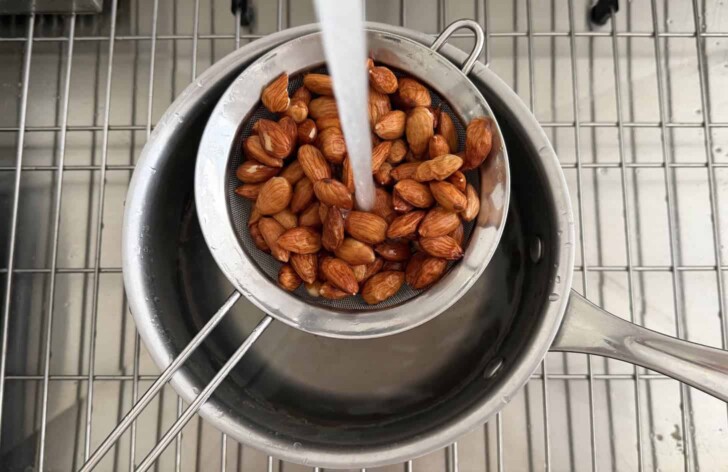
Step 2: Drain the almonds immediately in a colander and run them under cold water (or pop them in an ice bath) to stop the cooking process and cool them down.
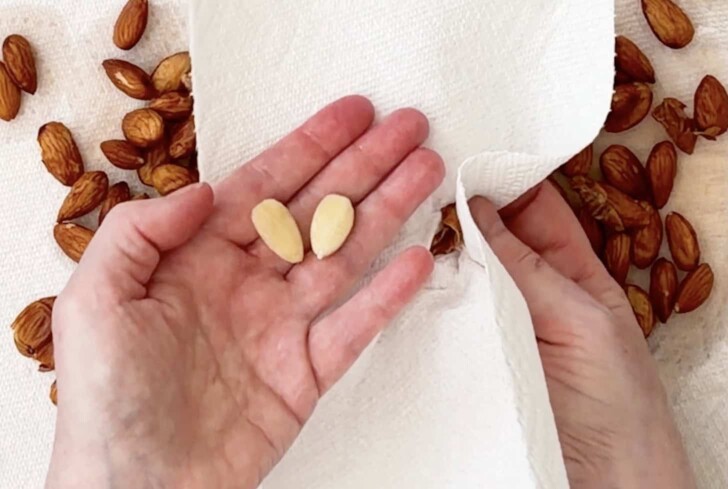
Step 3: Once the almonds are cool enough to handle, it’s time to peel. Hold an almond between your thumb and forefinger and give it a gentle squeeze. The nut will slip right out of its skin. Keep a towel close by so it doesn’t go flying.
Pro Tip: Spread your peeled almonds out on a clean paper towel and let them dry completely before using them in your recipes.
Recipes Using Peeled Almonds
Now that you have a bowl full perfectly skinless almonds, you can use them to make Florentine Cookies, a hearty Almond Banana Bread, or simply toss them with a bit of sea salt, roast them, and enjoy the ultimate smooth snack!


Roasting Peeled Almonds
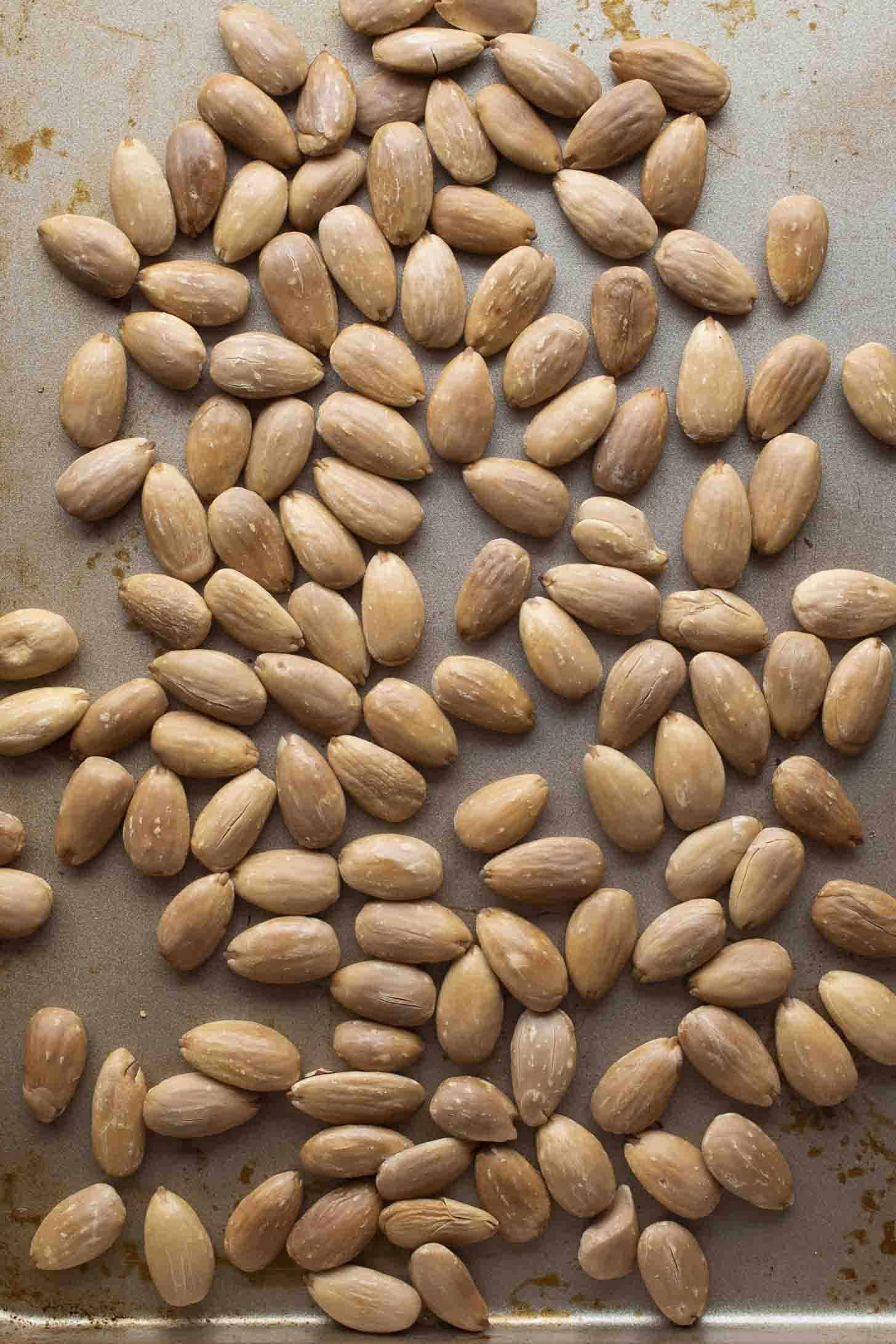
They are perfect to roast and store for a snack (see picture below).
1. Preheat and prep: Oven to 350°F (175°C).
Spread your peeled (blanched) almonds in a single layer on a bare rimmed baking sheet. Do not crowd the pan or stack them, as they need space to roast evenly.
2. Bake and shake: 8 to 10 minutes.
Place the sheet in the oven. At the 5-minute mark, give the pan a good shake or stir the nuts with a spatula to ensure all sides get equal exposure to the heat.
3. Check by scent and color: The critical test.
Start watching them closely around 8 minutes. Because peeled almonds lack skins, you will see them turn a beautiful, pale golden hue. The moment you smell a warm, rich, nutty aroma, they are done.
4. Cool immediately: Stop the cooking.
Transfer the hot almonds off the baking sheet and onto a plate or cutting board right away. Leaving them on the hot pan will cause the residual heat to scorch the bottoms.
Pro Tip: If you prefer the stovetop method, toss the almonds into a dry skillet over medium heat. Toast them for 3 to 5 minutes, stirring constantly, until golden and fragrant.
Storing Blanched Almonds
If you aren’t using your peeled almonds right away, storing them correctly is crucial. Because their protective skins are gone, they are more vulnerable to moisture and going rancid.
Here is exactly how to store them so they stay fresh, crunchy, and ready for your next baking session:
1. Dry Them Completely First: Before you put them away, ensure they are 100% dry. Any trapped moisture will cause them to grow mold or turn soft. Spread the peeled almonds in a single layer on a baking sheet lined with paper towels. Let them air-dry for an hour or so.
2. Choose Your Storage Spot: Once they are completely cool and dry, transfer them to a clean, airtight container or a zip-top freezer bag. Then, pick your timeline:
- In the Pantry (Up to 2–3 Weeks): Keep the container in a cool, dark, and dry cupboard. This is perfect if you plan on baking that banana bread within the next couple of weeks.
- In the Fridge (Up to 3 Months): Because nuts contain high amounts of oil, they can spoil in warm kitchen environments. Keeping them in the fridge protects those oils and keeps them fresh much longer.
- In the Freezer (Up to 1 Year): This is the ultimate long-term solution. Blanched almonds freeze beautifully. Just pull out exactly what you need for a recipe, let them come to room temperature on the counter for a few minutes, and you are ready to go.
How to Peel (Blanch) Almonds

Video
Ingredients
- 1 cup/5 ounces (140 grams) raw unsalted almonds, skin on
- Medium saucepan of water, filled half full
Instructions
- Over high heat, bring the saucepan of water to a boil.
- Add the almonds, let them boil for exactly 1 minute, and drain immediately. (Tip: Boiling for 1 minute is better than just soaking, as the active boil forces the skin to separate from the nut).
- Rinse the almonds with cold water to stop the cooking process.
- Loosely drape a kitchen towel over your hand and gently squeeze each almond between your thumb and finger. The skins will slip right off, and the towel will catch them from flying across the room!
How long should you roast almonds in the oven?
10-12 minutes at 350°F/175°C
Can you toast them after removing the skins to make them crunchy again or to use toasted almonds in recipes?
You can toast them after peeling. They will brown quickly so keep an eye on them. This can be done in a dry pan on the stove or in the oven.
To make almond cookies how long do I have to peel the skin and dry the almond before I make my almond cookie? thanks Sandra
Once the almond is peeled, the almonds dry pretty quickly if you lay them out in a single layer on a towel until they feel dry, should be 15 to 20 minutes.
Getting the skin off the nuts is major for people with leaky gut syndrome. However, the nut meat is very nutritional and adds protein to the meal.
Thank you so much for sharing the info, I had no idea this method helps leaky gut.
I was really skeptical at first, cuz it doesn’t look like its going to be an easy process, but that was so easy to do. Thank you so much for the recipe. I already had mine soaking in boiled hot water for 30 minutes but it still worked just fine. Thanks.
I’m so glad you tried it. Thank you for the feedback 🙂
Thank you. Perfect!
You’re so welcome. Enjoy whatever you are using them for 😀 Happy Holidays.
wow how easy was that. i timed it by kitchen clock with a third hand so it would be exactly 5 mins. and the skins were so easy to remove. brilliant. thank you.
I’m so glad this helped you and thanks for the feedback.
So she said 1 minute boiling and you said 5 Which should I do?
The recipe is correct, just 1 minute is all you need or they will not be crunchy and get mushy
wow how easy was that. i timed it by kitchen clock with a third hand so it would be exactly 5 mins. and the skins were so easy to remove. brilliant. thank you.
I literally just googled this yesterday and now I know. I found it funny that I had never done this simple task, lol.
I remember my mom teaching me this when I was in high school, one day we were having people over and wanted to make a cake! Very easy and effective!
Thank you for sharing this easy technique and this is truly useful.
What a great skill to know! I tried it once or twice, but always had trouble getting the skins to come off!
what a great tip! I I never knew this method. Thank you for sharing!
Thank you for sharing this great tip! 🙂
This is so simple, love it!! Nettie
Thank you Nettie
My wife finds it a bit time consuming ,the process of boiling cooling and running through cold water drying and let the skin come our…she wants to do it faster.
It takes only minutes to boil and cool and the peels come right off. This is the only method that works that I have found.
Wow, what a great post! I had no idea peeling almonds was so simple! Thanks so much!
Thank you Erren
Pure genius! I have always ended up buying ground almonds when I do baking, only because I always thought it time consuming to peel them, but your method is PERFECT! Now I can go buy my whole almonds for my pastry making.
Thank you!
Thank you so much Mary 🙂
I never realised it was so easy to peel almonds.
Would this be the first step in making Almond milk. I’ve never needed peeled blanched almonds before.
Great post! Thanks. I don’t think I’ve ever skinned them. Funny too, I remember telling someone once to get blanched almonds and she hassled me that why couldn’t I just call them peeled or raw almonds! hee hee
I need to try this. I always end up buying double so I have them both on hand. It would be so much better if I just blanched them myself! Thanks.
I had no idea this could be so easy, thanks for sharing!
Thank you for this great tips, they are always hard to remove!
Thank you for sharing this method. I’ve bypassed many recipes that use blanched almonds because all I have on hand is raw almonds. Now I can easily blanch and peel raw almonds when needed!
I used almonds a lot and I’m glad this is helpful to you.
I normally soak them overnight, but, this is an even simpler method to peel the almonds. Thanks for the idea.
No more overnight soaking 🙂