

Piccalilli Recipe
My Piccalilli recipe delivers a classic British mixed vegetable relish with a vibrant, tangy turmeric mustard sauce. It is a British staple for sandwiches, picnics, and charcuterie boards. Packed with crisp vegetables like cauliflower, green beans and carrots, this is the exact kind of heirloom recipe grandmothers have made for generations to preserve the harvest. Think of it as English Giardiniera.
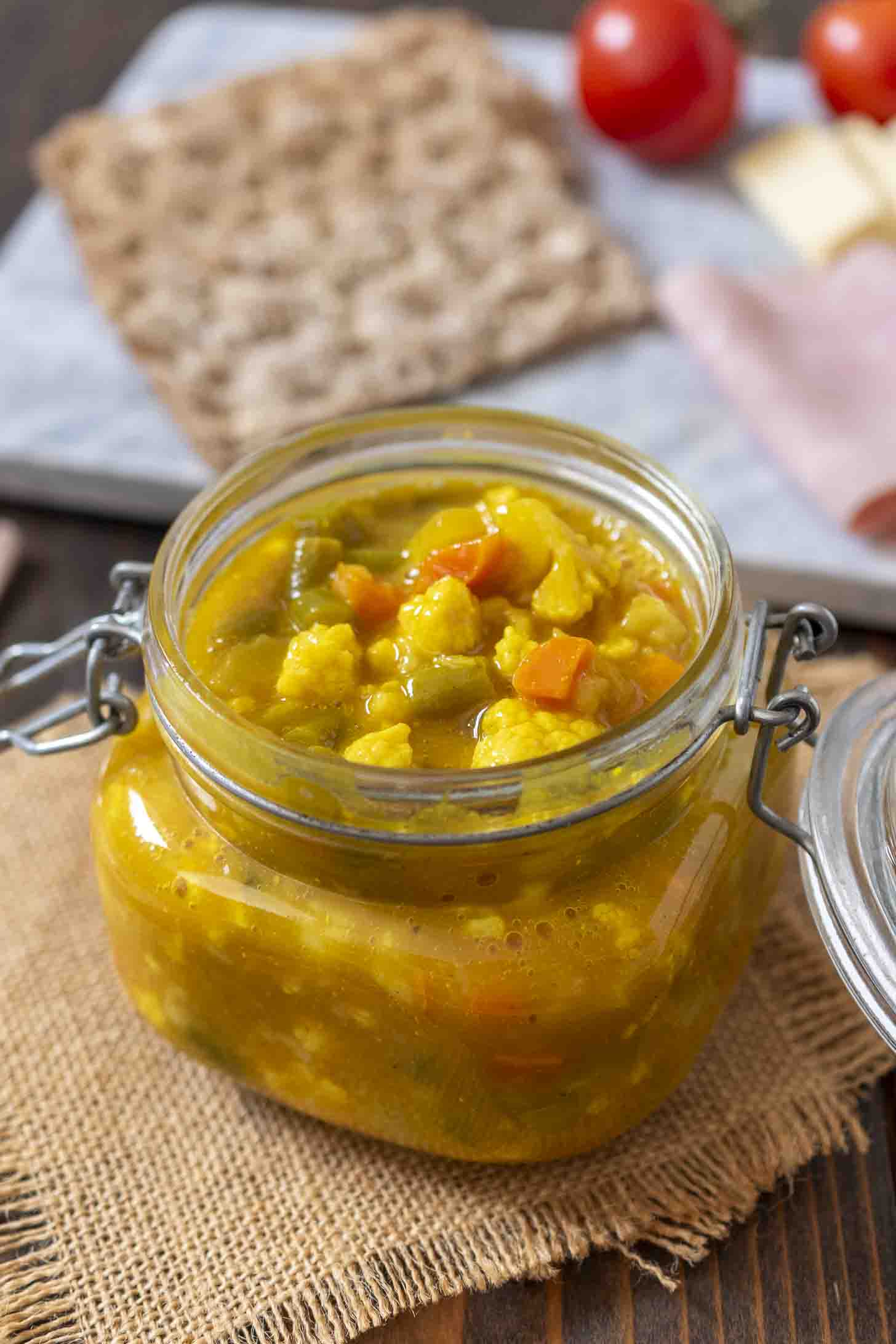
Table of Contents
Homemade English Pickle
Brits absolutely love their pickles. Just about anything gets preserved in a jar across the pond, from traditional onions to even hard-boiled eggs (yes, really!).
In addition to Piccalilli, another legendary staple – and the one I grew up eating – is Branston Pickle. It is another vegetable-based relish, but it features a rich, dark sauce driven by sweet brown sugar and tangy malt vinegar. I have my own Homemade Branston Pickle if you want to give it a try.
Since starting this blog, I have received so many messages from expats who are thrilled to finally make these authentic British comfort foods at home. While I can’t claim this Piccalilli is the single original recipe from centuries ago, it is my tried-and-true version that tastes just like home.
The History of Piccalilli
Piccalilli traces its roots back to the 18th century, when it was originally called Indian Pickle – a nod to its spice-forward origins. Because it was low-cost, easy to make, and lasted for months, it became an instant hit in British households.
The first known record of the name ‘Piccalilli’ appeared in 1772 in a cookbook by a Mrs. Raffald. She shared a recipe for ‘Indian Pickle or Piccalillo’ using common garden vegetables like cabbage, cauliflower, cucumber, kidney beans, and radish pods. While some modern variations include mango, those aren’t typically English.
What Goes into The Best Piccalilli
- The Vegetables: A crunchy mix of cauliflower, shallots, cucumber, green beans and carrots for a pop of color.
- The Cut: It is important to chop all your vegetables to a uniform size so they cook evenly and fit easily onto a cracker or piece of bread.
- The Mustard Sauce: A rich, golden combination of vinegar, mustard powder, ground ginger, nutmeg, and turmeric (which gives the relish its signature bright yellow color).
- A Note on Food Safety: Traditional piccalilli sauce is thickened with a bit of flour or cornstarch. Because of this, it is not recommended for long-term shelf canning, as flour can spoil. Instead, store your jars in the refrigerator, where the flavors will develop beautifully.
To keep this version authentic, we are sticking to traditional garden vegetables. I have seen mango and other ingredients used in recipe, but these are not typically British. The vegetables used need to reflect the British nature of the condiment and that are easily available.
How to Make Piccalilli
Making Piccalilli is a two-part process. First, the vegetables are tossed in salt and brined to draw out excess moisture—this ensures they stay incredibly crisp. Next, they are gently simmered in the spiced aromatic vinegar sauce.
This recipe yields about 4 cups/1 quart (32 ounces/2 pints). Though the final amount might vary slightly depending on how much liquid evaporates while your sauce simmers. For the best flavor, let it mature in the fridge for at least 3 to 4 weeks before diving in.
Serving Suggestions
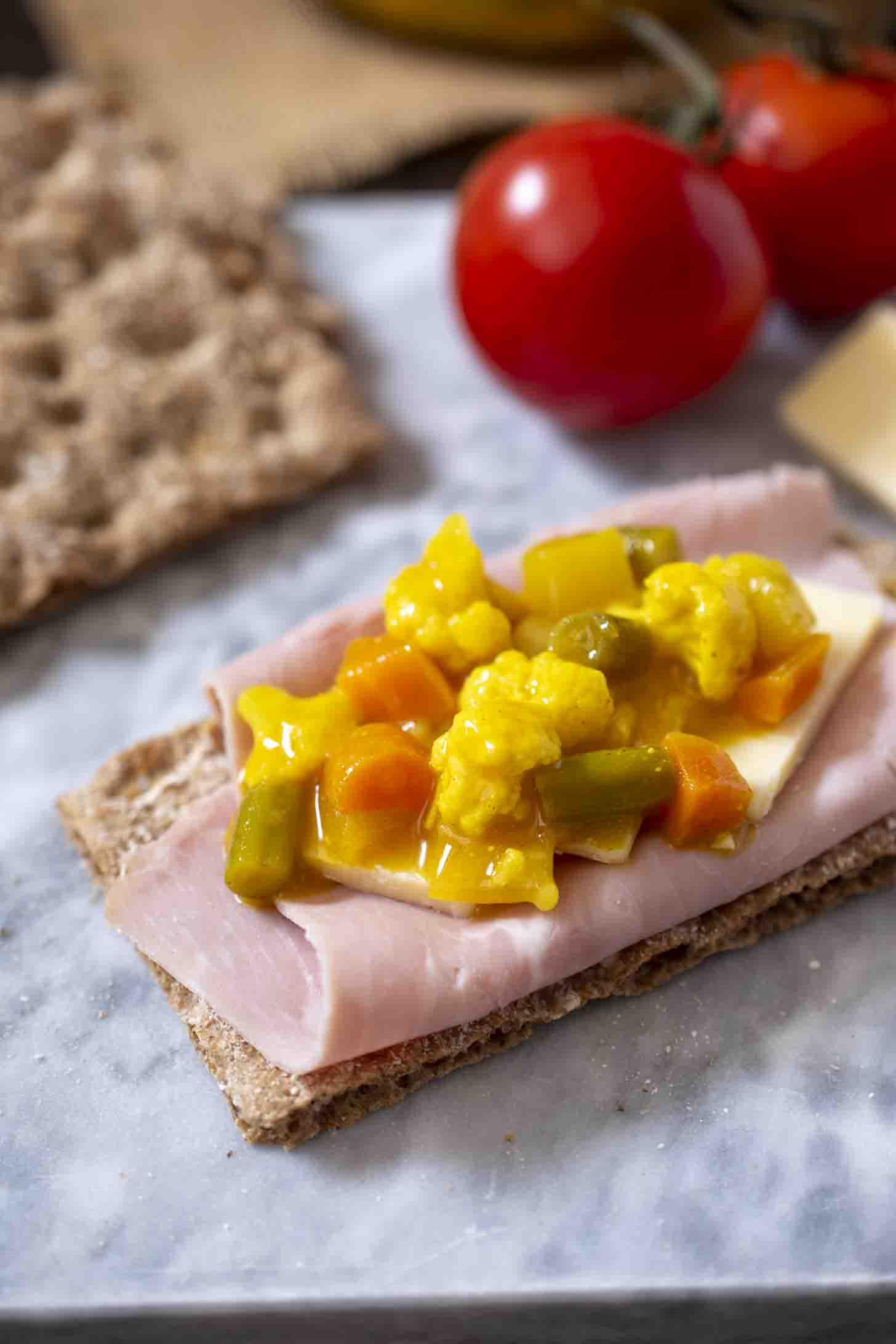
This versatile relish pairs perfectly with a sharp English Cheddar and sliced ham on crusty bread. You can also serve alongside a classic Scotch Egg or Pork Pie. It’s also a great option for cheese platters and could be a tasty addition a traditional Ploughman’s Lunch (pictured below), which is a classic British cold platter of bread, cheese, pickles, and ham. Truly, there aren’t many savory dishes this tangy relish won’t elevate.

Canning and Preserving
Long-term shelf canning is not recommended for this recipe. This is because the flour used to thicken the sauce can spoil over time. Instead, keep your jars stored safely in the refrigerator, and make sure to use them within 3-4 weeks.
Piccalilli Recipe

Video
Ingredients
Yields 4 cups/2 pints
- ½ pound (225 grams) cauliflower, chopped into bite-size pieces
- 6 ounces (170 grams) cucumber, chopped small
- 6 ounces (170 grams) shallot, chopped small
- ¾ cup (78 grams) carrots, about 2, peeled and chopped
- 3 ounces (85 grams green beans , chopped small
- 1 ½ tablespoons salt
- 2 ½ cups (1¼ pints ) white, malt, or apple cider vinegar, if you use malt or apple cider vinegar, the sauce may be darker
- ⅔ cup (132 grams) granulated sugar
- 2 teaspoons ground turmeric
- 1 ½ tablespoons mustard powder
- 1 ½ tablespoons ground ginger
- ⅛ teaspoon ground nutmeg
- 4 teaspoons all-purpose/plain flour
Instructions
Prep and Soak:
- Combine all vegetables in a large bowl and cover with cold water and salt. Cover with a towel and let sit for 1 hour, then drain thoroughly and rinse well.
Simmer:
- Add the drained vegetables, vinegar, sugar, turmeric, mustard powder, ginger, and nutmeg and a pinch of salt to a large saucepan. Bring to a simmer and cook uncovered for about 10 minutes until the vegetables are tender.
Sterilize Jars:
- While the vegetables simmer, submerge a 32-ounce/1 liter jar (or 2-16 ounce/473 ml jars) and lids in a large pan of water. Boil for 10 minutes and keep them hot until ready to use. Remove with tongs and set on a towel to dry.
Thicken and Seal:
- Mix a little cold water with the flour. Whisk until there are no lumps, stir it into the vegetables, and simmer until thickened. Fill the hot jar, leaving 1-inch of headspace. Seal tightly and allow to pickle for 3–4 weeks. Refrigerate for up 1 week after opening.
- Note: Long-term canning/preservation is not recommended as the flour can spoil over time.
can i include green tomatoes in this recipe
I think it would be fine to add green tomatoes. I would replace maybe some of the cucumber so you still have the same ratio of veggies and sauce. To keep the sauce from getting watery, toss the chopped tomatoes with a little salt and let them drain in a colander first, then give them a quick rinse and pat them dry. Enjoy! 😊
I water bath canned it, leaving the flour out and adding 1/4tsp calcium chloride(Pickle Fresh)per pint. It came out fresh, crunchy, and like the relishes I’d get in Bath, England. It’s also shelf stable.
Thank you for sharing your canning tweaks—omitting the flour is a great safety tip for other water-bathers, and I love the idea of using Pickle Crisp.
Excellent taste.
Works with chokos or any firm green veg.
Thank you
Love your recipe of piccalilli. Can I use white vinegar instead of malt, apple cider vinegar?
Yes, it is listed in the ingredients.
I have this pickling right now. I did have a sneaky taste and I like it very much 🙂
Great, enjoy!
I had 8 cups of the Picalilly- but I did not have a scale and I gestimated.
I’m curious if cook type starch or canning starch would be a better use in this recipe rather than flour? Since there is a preserving acidic liquid in the recipe, I’m curious if it would work. Especially if I were to just lightly blanch the vegetables and then water bath can the recipe and that would finish cooking the vegetables and infuse them with the flavor of the sauce. If you have any advice, please if you could, tell me what you think or valuable information for following through with my idea. Thanks in advance
As I mentioned above, I do not know enough about canning so I can’t answer this. Because there is flour in the recipe is why I don’t recommend canning.
You could use clear gel for hot products and hot water bath for probably 10 minutes because it’s straight vinegar. Nothing’s going to get botulism.
Thank you
This recipe has a good balance of flavour and thickness of the sauce is perfect for me. I found it slightly too sweet for my taste , and will reduce the sugar next time I make some. I should add that I received many compliments from whoever I gave a jar . Thank you for sharing your recipe
Nejat
Thank you for the feedback.
Can you use golden caster sugar instead of granulated white sugar?
I have not tried it, but I’m not sure how it would affect the flavor.
Can I use cornstarch instead of flour?
Yes, that would be fine, just half the amount.
I used to make the BBC goodfood piccalilli and after I made this, I like this better, so much more flavor, thank you.
Wow, thank you so much.
Hi Janette – I’m currently making this for my British friend who’s coming back to Phoenix again and he likes really spicy food. How could I zap this up a little. Just finished making him 4 jars of your Indian Apple Chutney to take home because he loved it last time over. You’re making me a lot of work….lol but he loves it. The smell of vinegar is driving my husband mental but he’ll get over it.
Sliced jalapeños would add spice or some chili flakes.
One of the better recipes I’ve tried. I left out the green beans
Thank you
Is Colemans mustard powder ok or should it be a milder one?
Yes, Colemans is perfect
I’ve cooked mine to recipe …but mine doesn’t look as yellow as your pic ?
The color comes from the turmeric. I wouldn’t worry if yours is a darker yellow. It could be the vinegar you used. Tasting good I think is the most important thing. I hope this helps and enjoy.
Hi where does the sugar come in, it’s listed in ingredients but not in instructions please.
I’m just about to make this,
It’s listed in step 2. Enjoy.
Yes, i re-read it, thank you, never seen it first time i read. I have now made it, and stored away. Deborah.
Great, enjoy 🙂
Hi there,
This is the first time attempting to make Piccalilli and I was just wondering why do you leave a one inch gap at the top of the jar? Will it affect the preservation if I fill them all the way to the top?
Thank you.
When preserving vegetables in jars, it is normal practice to leave what is called ‘headroom’ at the top of the jar. This is done because when they are put into a water bath to seal the jar, there will be pressure built up in the jar. But in this case, I like to leave space because sometimes the vegetables can omit some of their own liquid from the fermentation process and this may increase the volume, so I leave a small space just in case. I hope this makes sense, and enjoy 😃
Awesome thank you. Yes your explanation makes sense 😊
You’re welcome
Awesome thank you. Yes your explanation makes sense 😊
You’re welcome
Fantastic recipe it’s very nice if you add 1 teaspoon of dry chilli flakes
Sounds delicious, I’ll give it a try.
Your recipie looks lovely! Years since I made Piccalilli so think Ill do it again!
Ive found by leaving it in a dark cup board for over a year it was even better!
Thank you for the storage tip and if you have any questions about the recipe just let me know. Enjoy 🙂
Lovely recipe easy to make and very well received… I have been asked to make more
This is great to hear, thank you for sharing.
The recipe says to refrigerate up to one week, but the description above says that they should pickle for at least 3-4 weeks. I’m confused?
Sorry about the confusion. They are to be pickled for 3-4 weeks then refrigerated for up 1 week after opening. I’ve edited the text to make this clearer.
Working on cooking this now. how long does it usually take to thicken? can this be eaten right away or does it need to sit for a while before enjoying? I’m an American cooking this for my British boyfriend!!
Step 4 of the recipe states it needs to be refrigerated for 1 week. This will thicken.
Hi – thanks for the recipe. I am wondering what size and how many jars to use. Thank you.
The recipe yields 1 liter/4 cups/1 quart of piccalilli. I’ve added jar sizes to the recipe. I hope this helps.
Can this recipe be doubled ie. all ingredients ?
Yes, you can double the recipe. Enjoy 🙂
Living now in Canada, it is great to see your British recipes. However, I am unable to save my favourites to Pinterest even though you have the P symbol. Any reasons why? I guess I will just have to print them off but I would prefer to put them in my Pinterest collection. (Hope to save paper and ink)
Thank you, Sally.
I’m not sure why you’re having trouble saving to Pinterest. To make it easier, I have an all British recipes Pinterest board if you want to save them from there. Here’s the link: https://www.pinterest.com/culinaryginger/culinary-ginger-british-recipes/
Hi. I live in Turkey and can’t get powdered mustard. I have a jar of ready made English. Could I use that, if so how much?
Yes, you can use English mustard. Just be aware that it has a stronger taste and spicier than the powder. I would start with half the amount. Enjoy.
Your recipe sounds close, though the ingredients can vary a bit. I have a jar of Haywards Piccalilli in front of me. The vegetable ingredients are: cauliflower, onion, gherkin (cucumber). The spices listed are dry mustard, turmeric, ground ginger, cayenne pepper, salt. I think I will combine your instructions with the ingredients lists on the label. Thanks for posting.
Do you cold pack the recipe for the English Piccalilli? or pressure can this recipe? I am very interested in this recipe as my husband does enjoy the homemade piccalilli that I purchased from the Farmer’s Market.
I don’t do either because it doesn’t last long enough but if you’re familiar with these canning processes either would work.
I made this today for a British themed picnic I’m having this weekend. Tastes really good and can only image it gets better with age.
Thanks Fiona. I’m so jealous of your picnic, enjoy!
I’ve heard of piccalilli but have never tried it. Yours looks and sounds like I would really enjoy it.
This looks just like my mums. Since my wife is the cook I think I need to woo her into making this 🙂